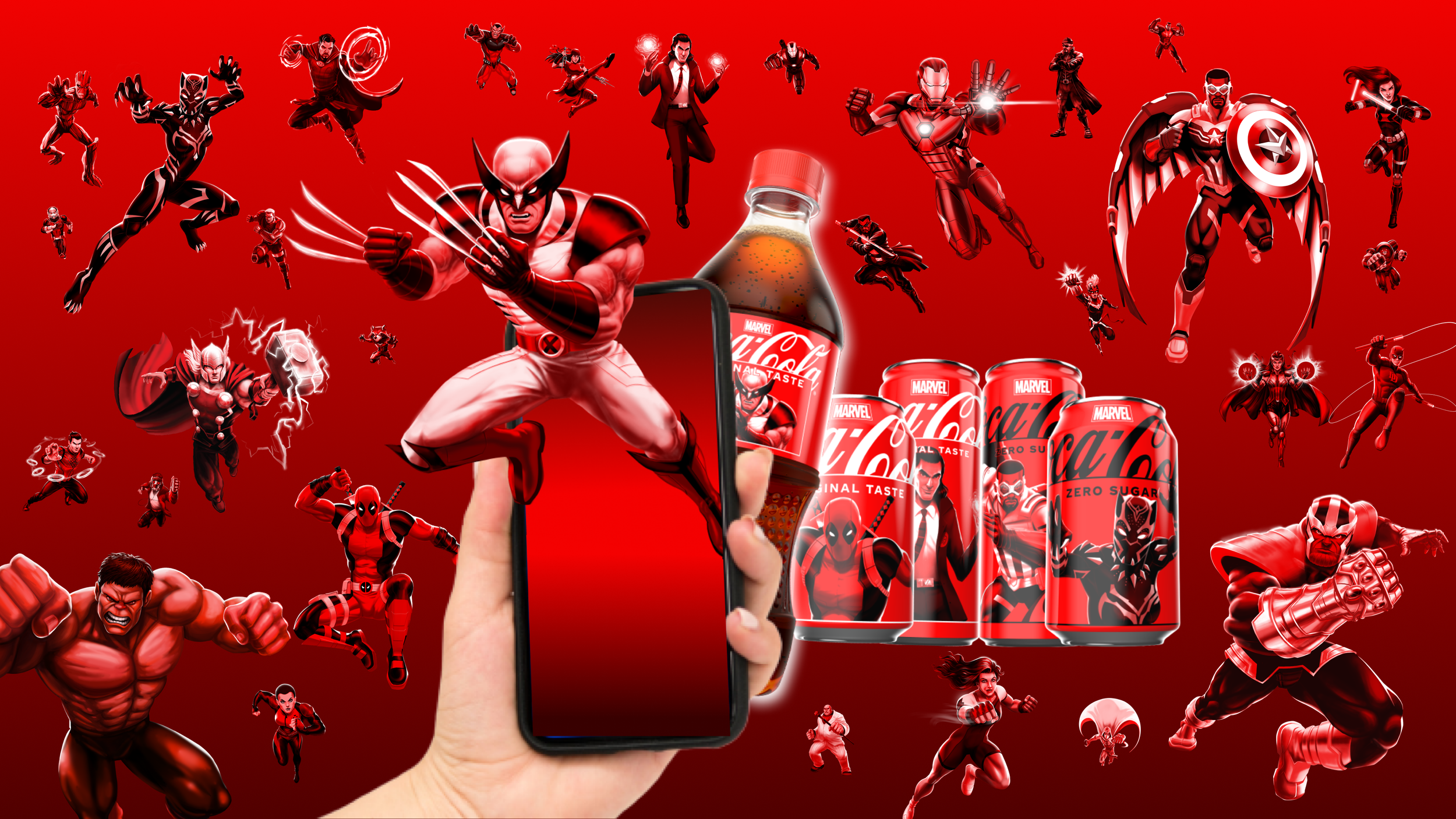
How might a Coca-Cola can unlock the Marvel Universe?
VML, Disney, Coca-Cola + SubVRsive
In Short
Coca-Cola and Disney released 32 Marvel characters on collectible cans and bottles. I helped lead and complete the brand-new AR experience that brought each character to life when a fan scanned their products, built to keep fans engaged across a multi-month global campaign.
My Role
Senior UX Designer on a team of 2 to 4 experience designers in VML, partnering with 8-12 SubVRsive teammates on technical execution. I helped facilitate client and partner workshops, developed character profiles + storyboards for all 32 characters, and built the user flows, journey maps, and low-fidelity prototypes.
Results
1.95 billion global impressions • 5.29 million earned social impressions • Coca-Cola's #1 selling North American merchandise
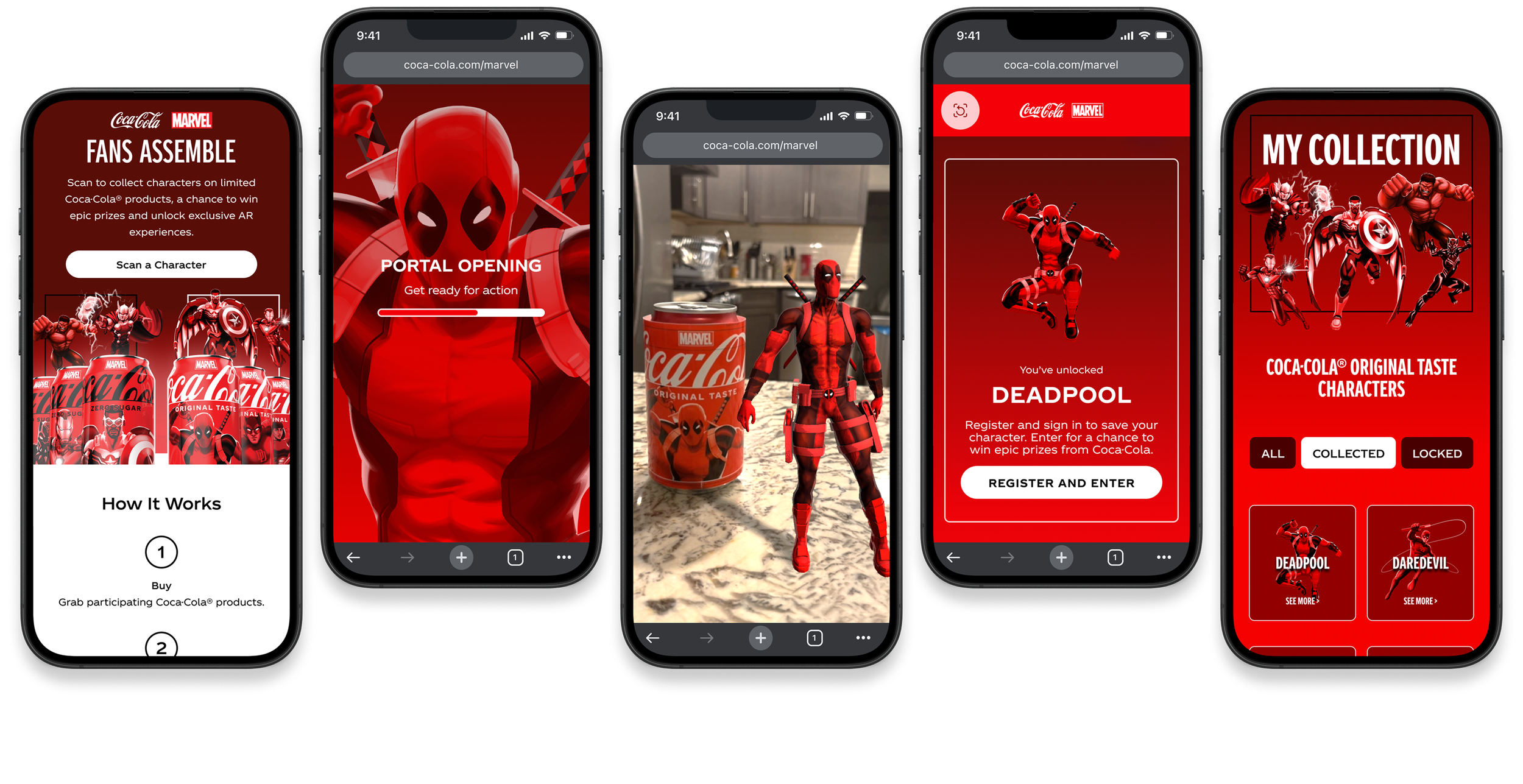
One of 38 final core loops in Coca-Cola’s mobile experience: the landing page, opening portal, four-stage AR performance, collectible unlock, and Collection Hub.
Beginnings
Coca-Cola, Disney, and Marvel Entertainment launched “Comicans,” a global line of 32 Marvel characters on exclusive cans, bottles, and packaging. But a collectible can is just a can unless it gives fans something more. So we asked: how might we turn a can into a doorway that rewards both casual fans and hardcore collectors, purchase after purchase?
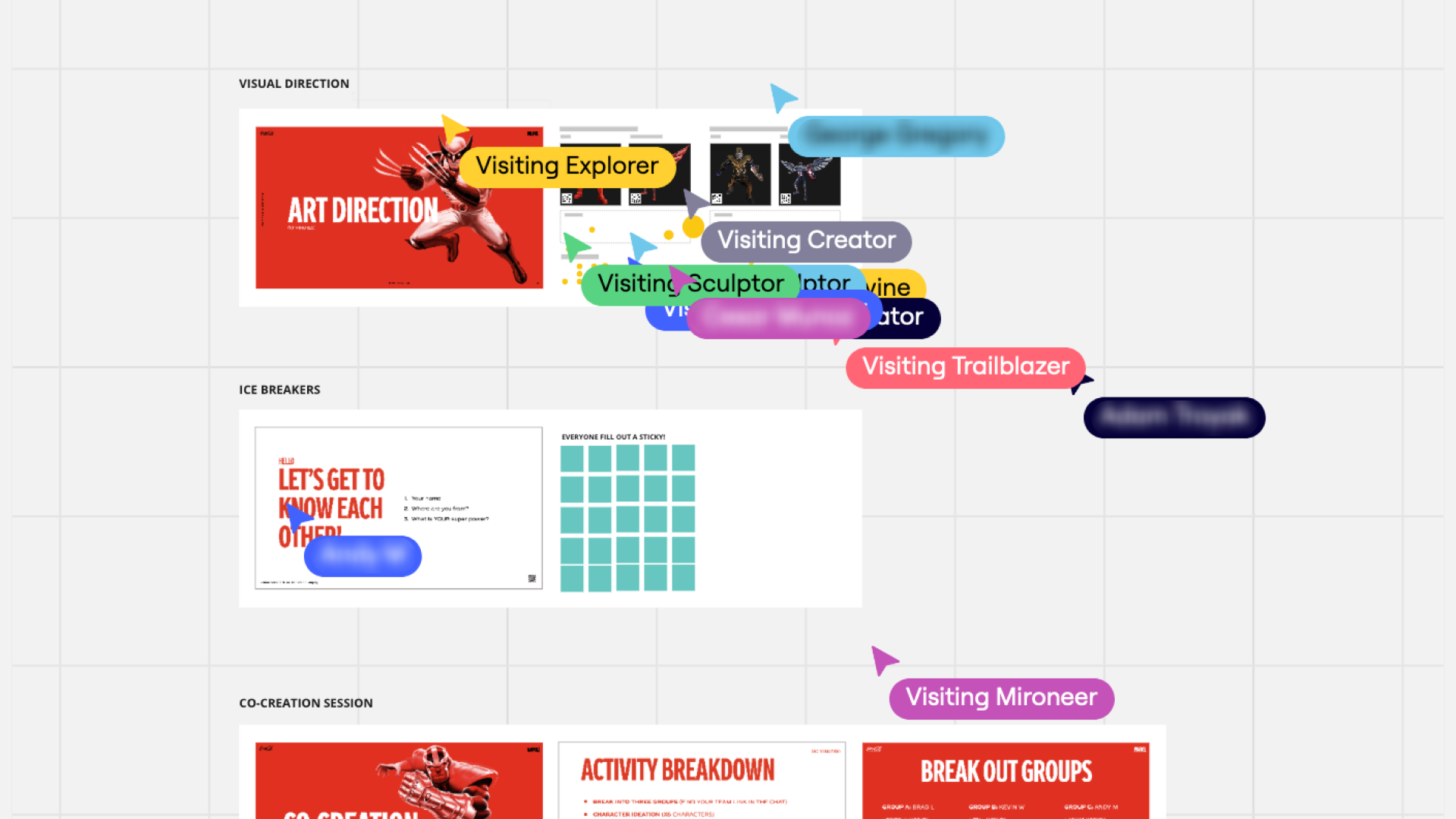
I helped facilitate an early client workshop to build trust and learn what each stakeholder cared about most.
Too Many Ideas, No Shared Direction
Early on, clients and team members had very different expectations. To find common ground, I researched comic art, animation and gaming effects, mixed-reality techniques, Marvel storylines, and the limits of mobile AR, then organized it all into one structure the whole team could react to.
Everyone wanted a dense, layered experience full of storylines and Easter eggs, but our scope and timeline couldn’t support all of it. With every option side by side, the team agreed on a mix of creative and technical compromises, like cutting dialogue to simplify translation and limiting visual effects to a small set of reusable libraries.
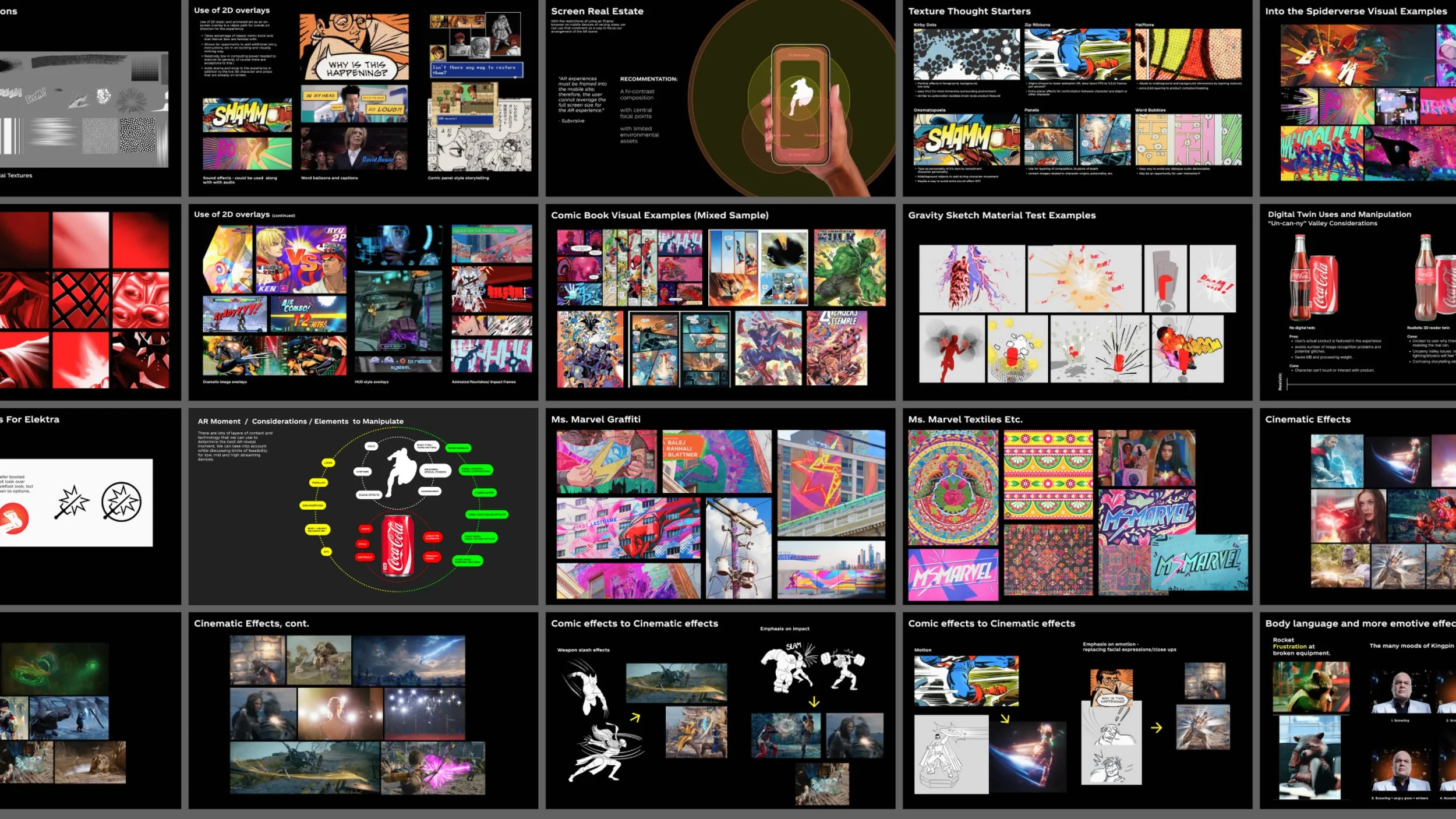
I organized my research into multiple presentations that put every variable in one place, so the full team could discuss it and align.
38 Moments, Each with Its Own Story
Next, every AR moment needed a story. I helped develop character profiles for all 32 characters, plus 6 interactive pairs, and turned them into storyboards for each moment, keeping every power and movement true to Marvel canon.
The storyboards made the full scope visible early, so the team could see where effort would pile up and decide who would build what. Working with Disney, we lowered complexity without lowering quality: we simplified each character’s actions into four looping phases and swapped violent moves for dances and playful choreography..
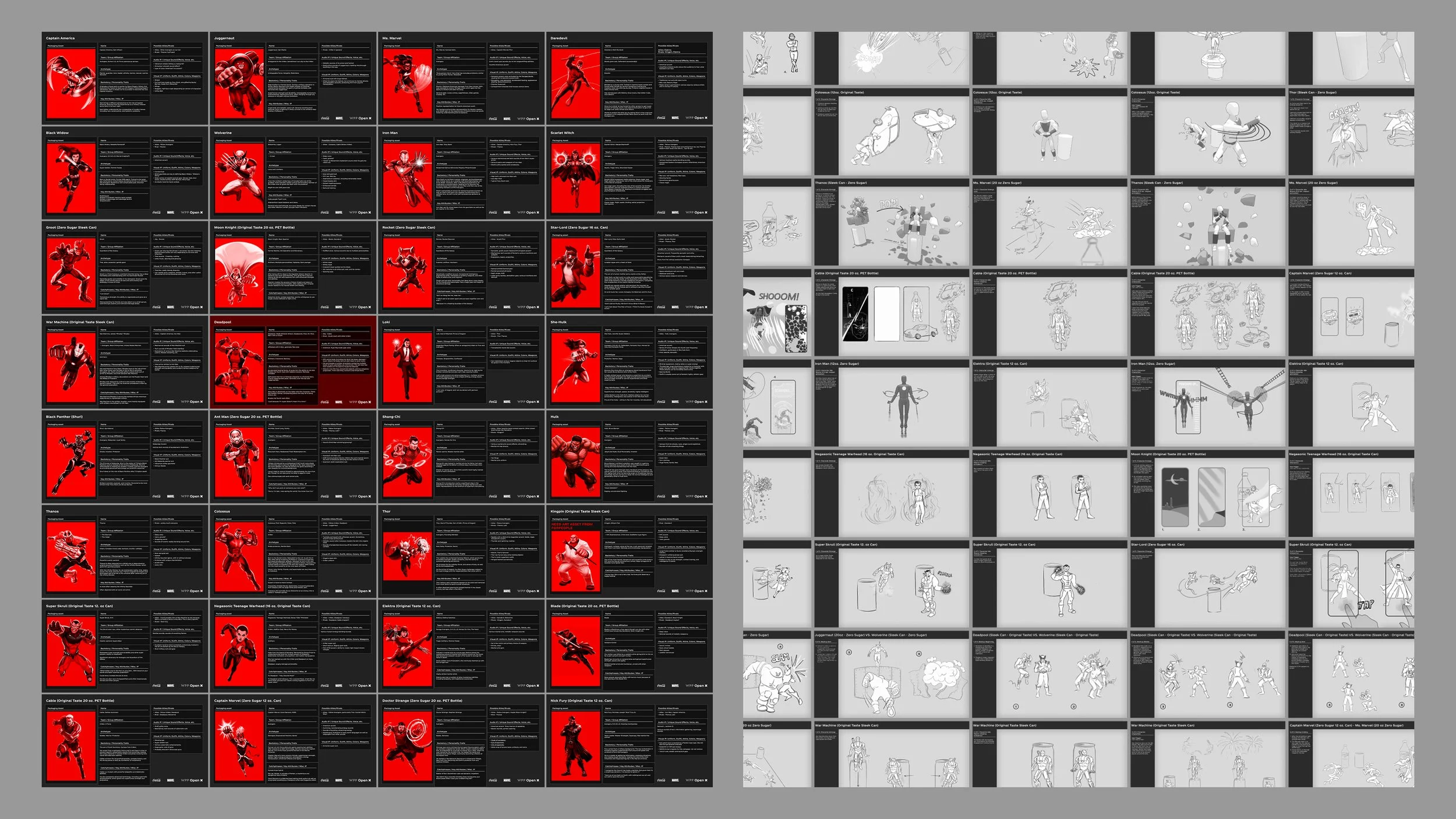
Left: Character profiles gave the rest of the team richer context to build from. Right: Storyboards for every AR moment made trade-offs and task assignments easier to decide.
Keeping Quality High on a Lighter Build
As production ramped up, SubVRsive and the engineering teams pushed back on how much time and weight each AR moment was adding. With limited bandwidth, the experience had to get simpler.
Instead of letting quality drop, I kept offering lighter ways to deliver the same impact. Many characters needed scene-setting objects, like helicopters or spaceships, built as heavy 3D models. I proposed replacing them with flat, lightweight 2D graphics that animate in before the character emerges. This cut build time and polygon weight, freeing the team to focus on high-quality character design.
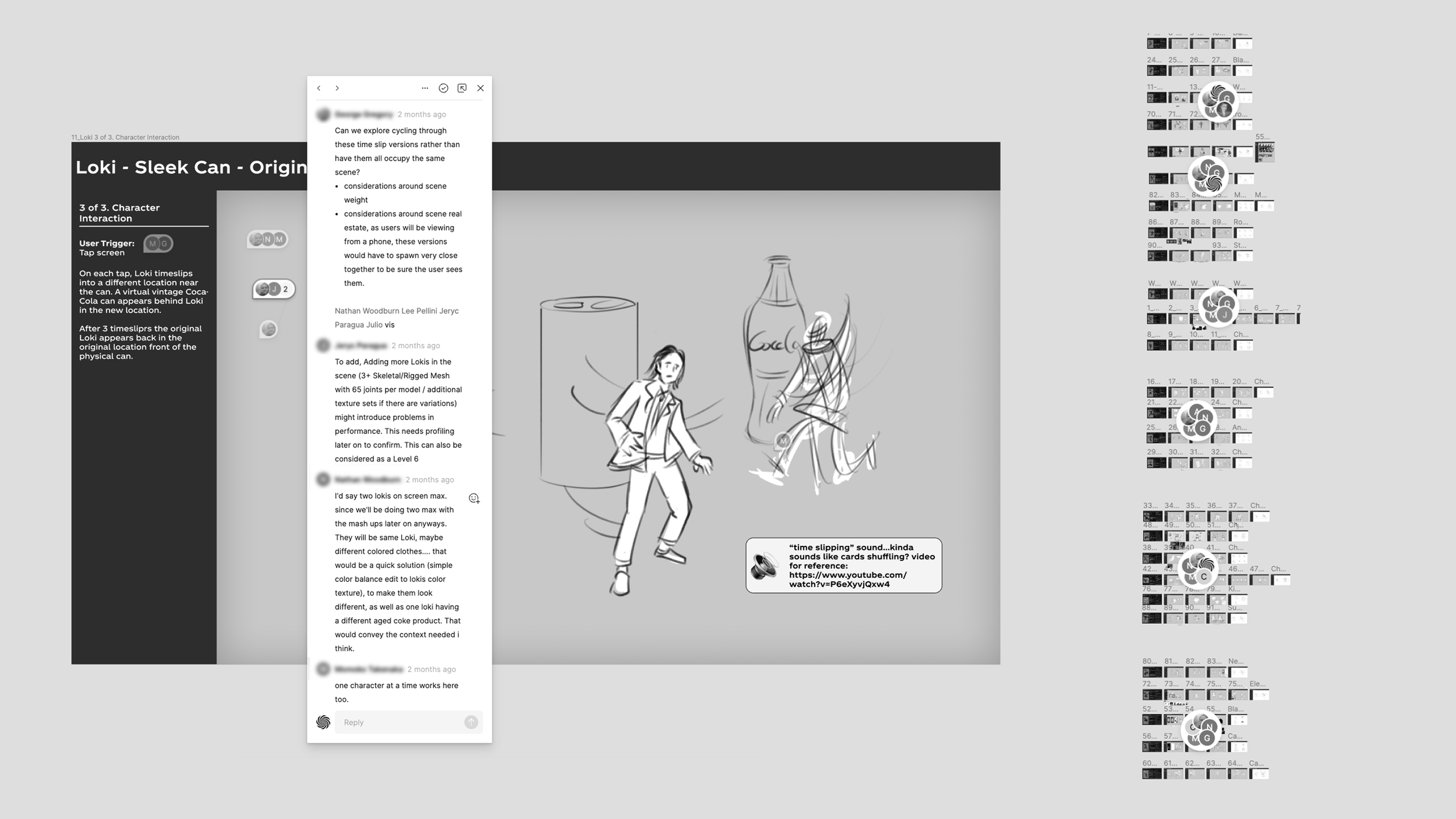
Left: Rounds of feedback on a single AR moment kept every team working toward the same direction.
Right: I set up Figma as our central hub for project materials, keeping the team organized.
One Journey Across Every Screen and Market
Alongside the AR work, the campaign needed a microsite, built on Coca-Cola’s OpenX design system, to show fans how the experience worked on desktop and mobile. I partnered with SubVRsive’s design team on user flows, sitemaps, journey maps, and touchpoint maps.
This documentation helped the team plan for multiple launch dates, international markets, and translations. It also showed the wider campaign teams how many assets and states each character needed, so everyone could plan delivery and handoff for each phased launch date.
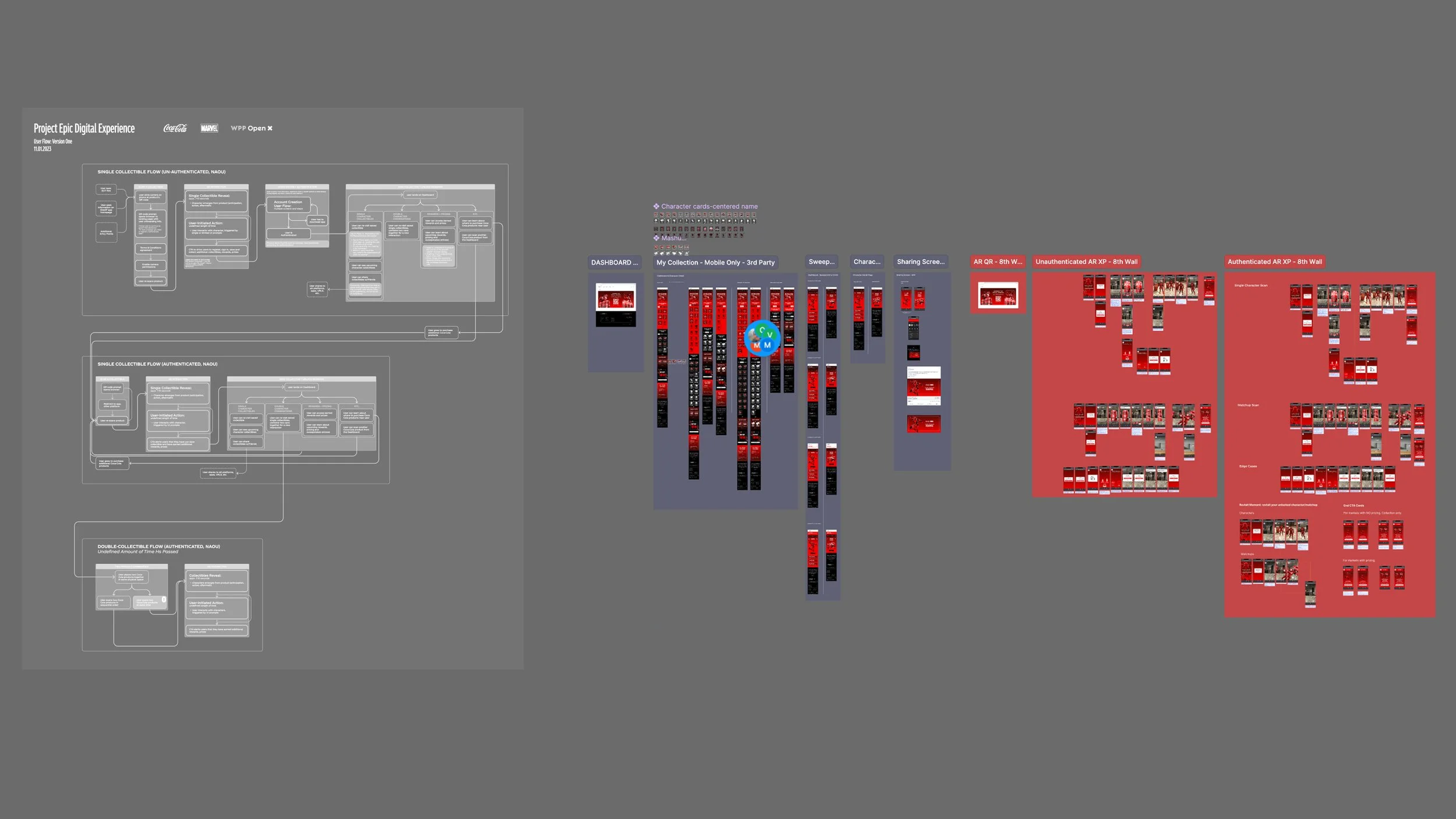
Left: I mapped the full journey, from sign-in on Coca-Cola’s website to the mobile AR scan, so every team could see how the pieces connected.
Right: A selection of final desktop and mobile pages, built in Figma with Coca-Cola’s OpenX design system.
Filling the Gaps to Hit Launch
Building 3D models for 32 characters took far more time than planned. While more people moved onto finishing the models, I filled gaps elsewhere: low-fidelity Figma prototypes of title sequences and character performances, a reusable design and asset system to speed up production, and the 2D supporting assets each character needed, including the lightweight scene-setting graphics. Together, the team delivered hundreds of assets on time for launch alongside the larger brand campaign.
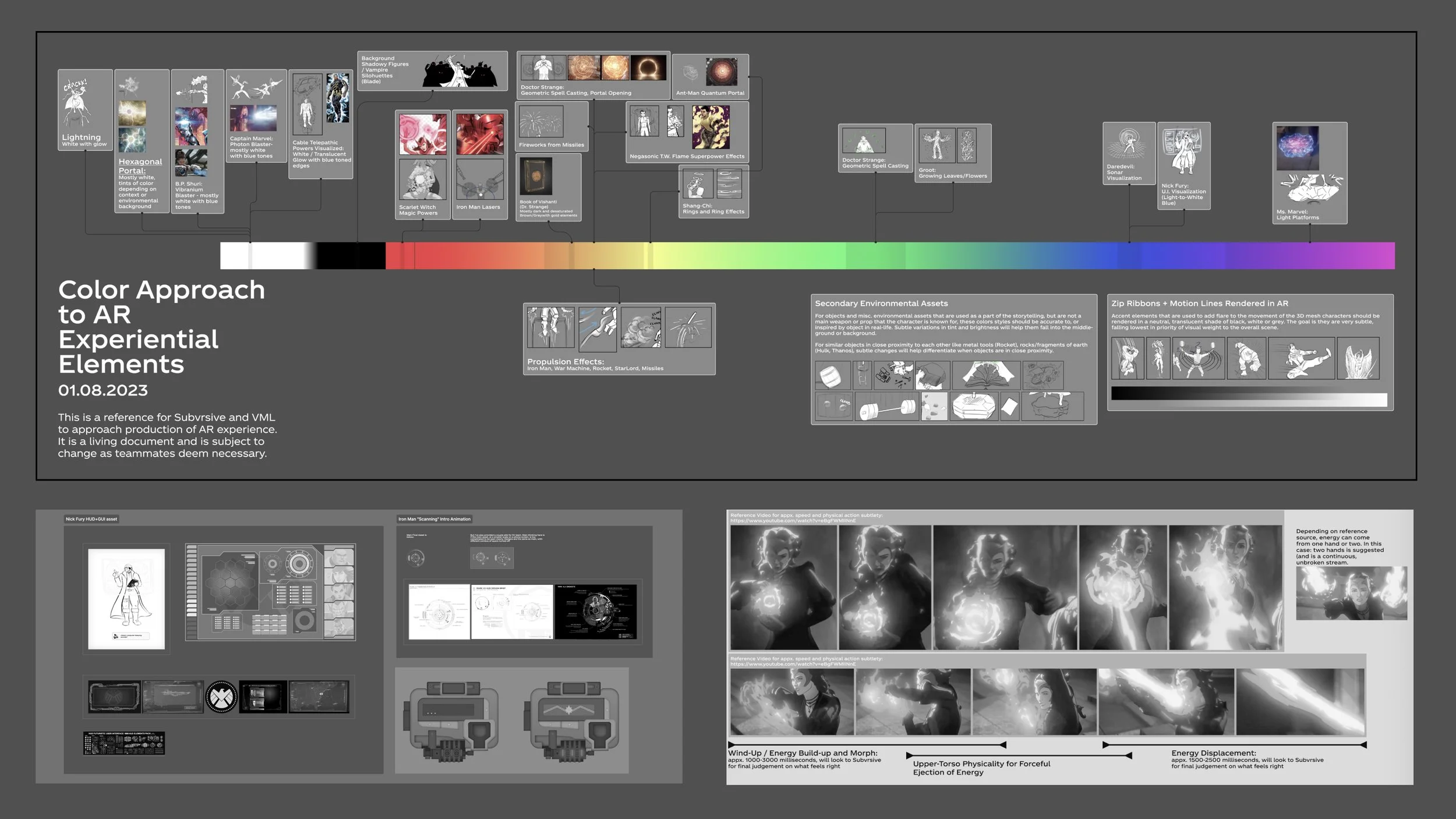
Top: I outlined a color approach for every character’s AR moment and its supporting assets.
Bottom left: Illustrated assets for Nick Fury, Iron Man, and Captain Marvel.
Bottom right: My annotations for Scarlet Witch’s animation and motion effects.
Results
Comicans launched alongside in-store products in 50 countries, supported by a new TV commercial and a broad social campaign. It generated 1.95 billion global impressions and 5.29 million earned social impressions, and the collectible line became Coca-Cola’s #1 selling North American merchandise.
“...an unprecedented campaign that taps into the power of the Marvel Universe […] and tells stories in a way that can only be done when Coca-Cola and Disney come together.”
Mindy Hamilton
Senior Vice President of Global Marketing Partnerships, The Walt Disney Company
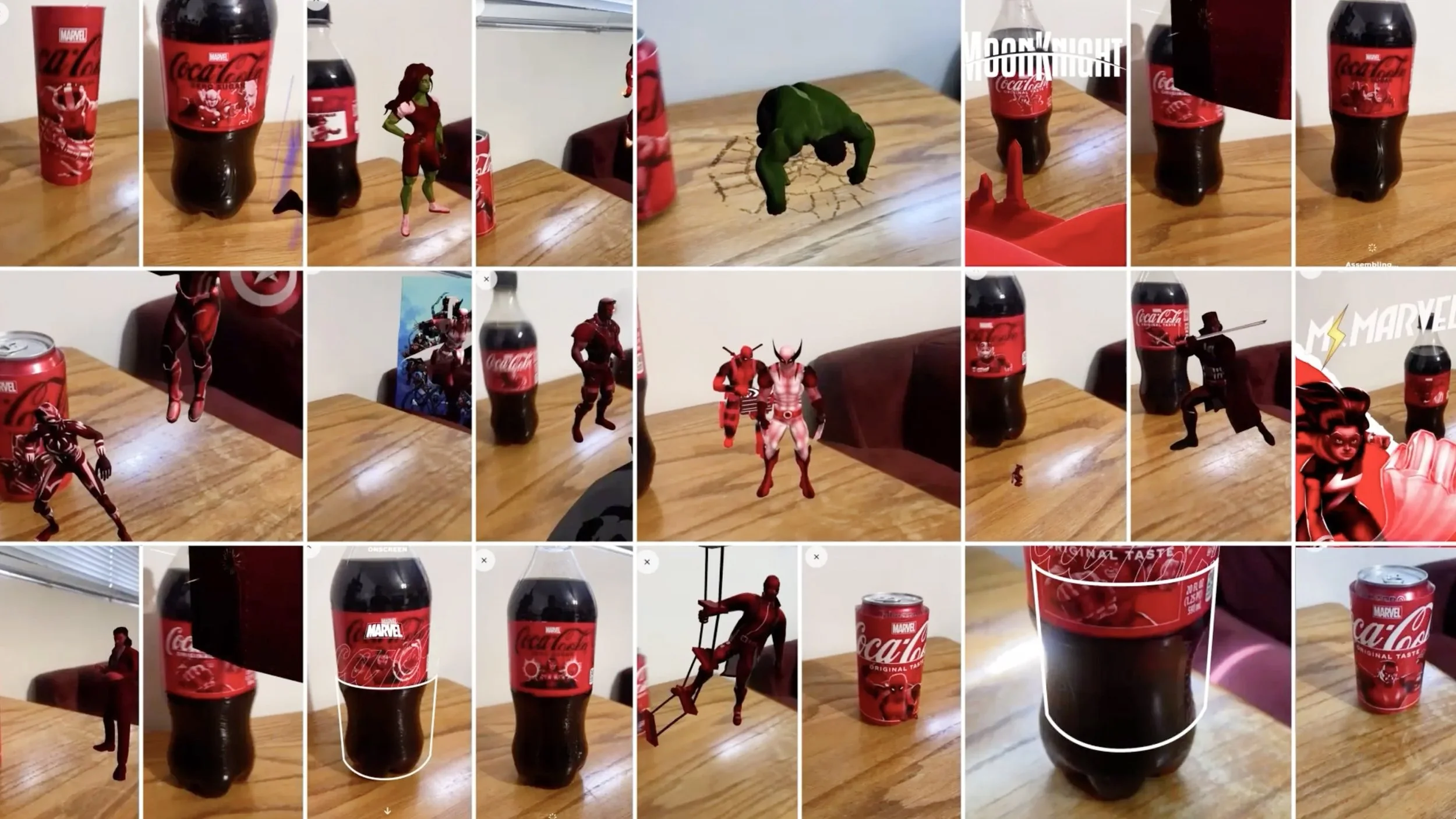
Frames from several characters’ AR moments.
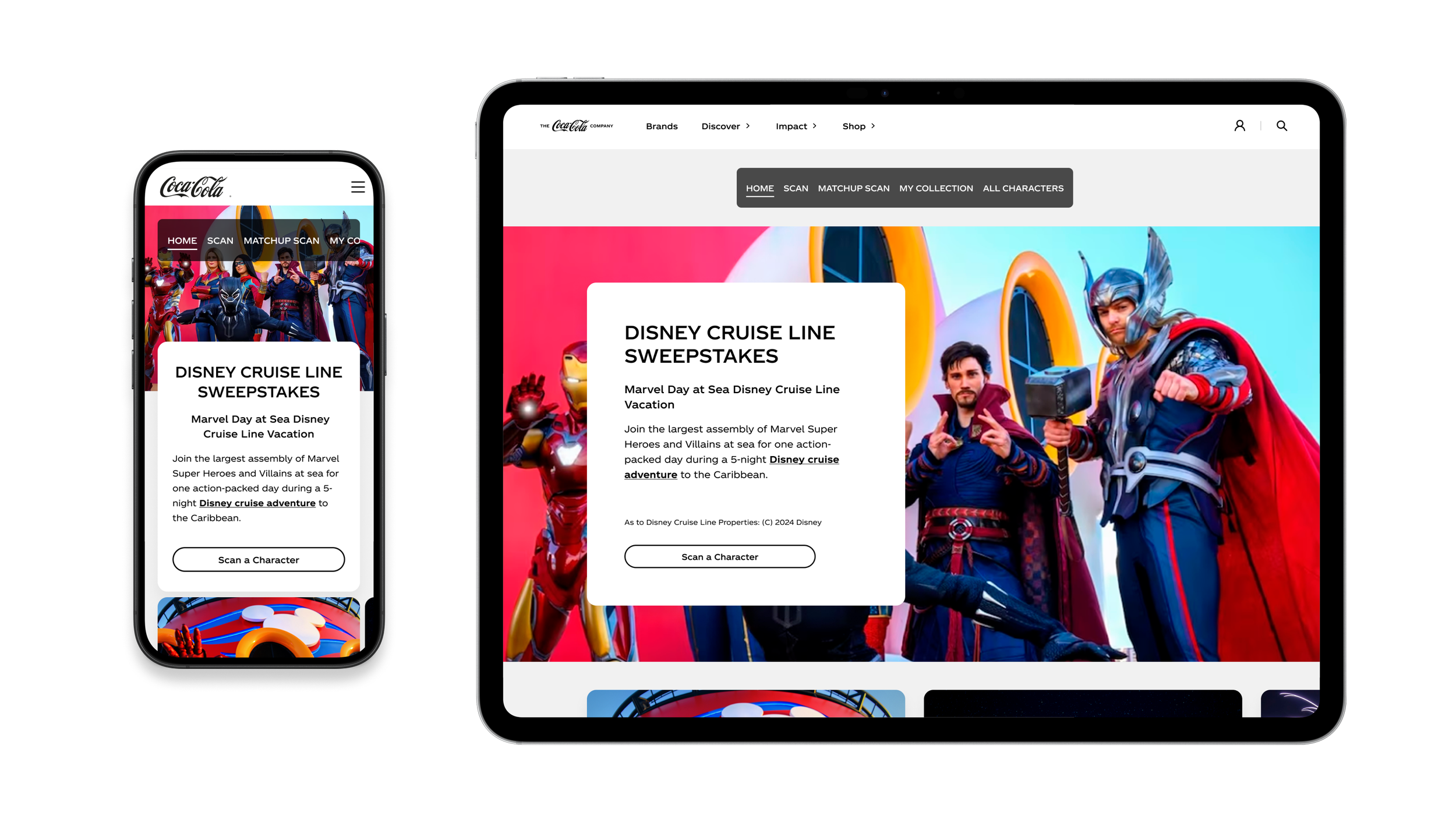
The microsite landing page on mobile and desktop.
Learnings & Lessons
AR experiences are more complex to run than they look, and they depend on technical foundations that work on both slow and fast connections. Designing for Marvel sharpened my sense of the gap between the ideal design and the feasible one, and the nine-month engagement made me a stronger 3D, systems-level thinker.
Next time, I’d bring engineering into the RFP and pitch process, so everyone understands early how complex an experience can be when it looks simple on the surface. I also came away with a new appreciation for the art, history, and culture of comic books, and I’ll bring that understanding of the medium to future graphic storytelling projects.