Sound Advice
A sensory, EEG-driven travel-matching activation
VML, Tennessee Department of Tourism Development
The Ask
Re-energize the Tennessee tourism brand with an immersive, personalized activation that connects concertgoers to real Tennessee destinations.
My Role
UX Design Lead
Cross-Functional Collaboration, Journey Mapping,
Structuring Information & Systems, Experience Design, Prototyping
Results
10+ minutes of sustained use per participant • Activation expanded to additional tours and events • Led to an ongoing multi-year, multi-campaign partnership
Background
The Tennessee Department of Tourism Development wanted to re-energize its brand around a simple truth: Tennessee is the country's premier music destination. At the same time, it wanted to keep uplifting its five core pillars: music, outdoor, family, cultural, and culinary attractions.
Aligning with the new campaign tagline, "Tennessee Sounds Perfect," VML developed a custom sensory activation for concertgoers on an active music tour. Fans stepped into an on-site booth and listened to authentic sounds and songs from across Tennessee while wearing a MUSE device (a research-grade EEG headband) which measured their brain activity to determine which sounds resonated most.
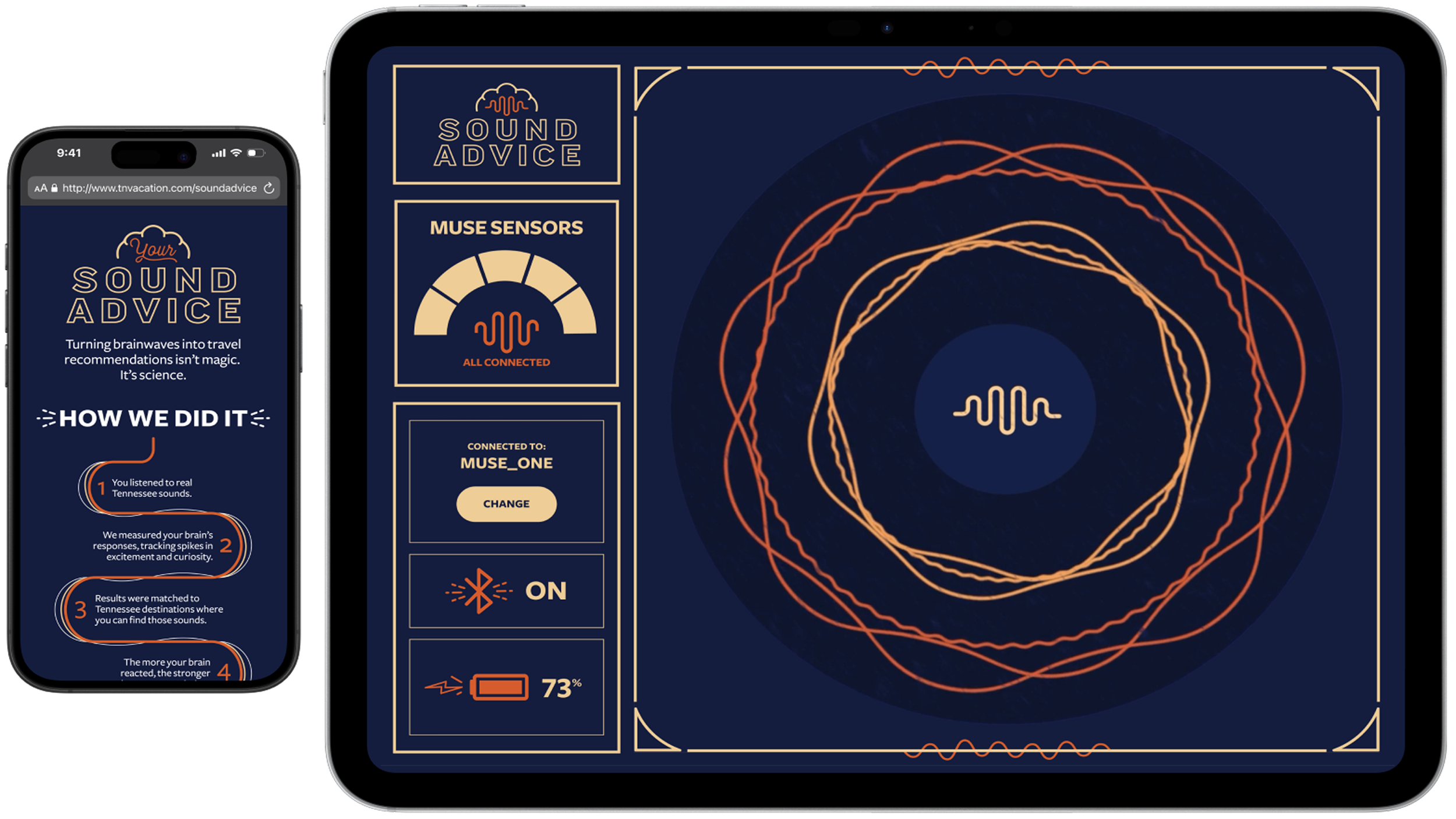
Each participant then received a follow-up email listing their top-matched Tennessee destinations based on their brain wave response.
Team & Role
I was the UX Design Lead on a small, cross-functional team of 6 to 9 creative directors, strategists, project managers, and engineers/technologists. Through close cross-functional collaboration and co-creation facilitation, I owned design of the two core digital touch-points at the center of the experience: the in-booth iPad app that controlled the EEG session, and the personalized results delivered afterward.
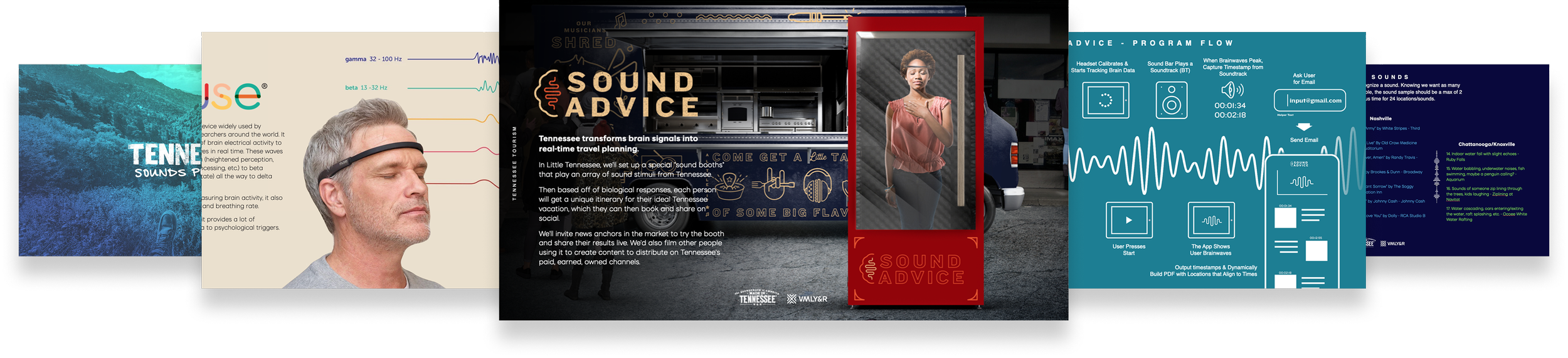
Pages from the activation brief, establishing the future-experience mapping.
The Approach
Following team introductions, campaign briefing, and approach alignment, I explored the conceptual and emotional storytelling of the end-to-end experience through mood-boarding, data visualization, storyboarding, and motion/animation studies.
In parallel, I defined the functional execution of the iPad app through journey mapping, sitemaps, wireframes, user and screen flows, and rapid prototypes built in Figma and After Effects.
Once the experience was refined and approved, I partnered with technologists and motion designers on a clean handoff of files and assets, including a lightweight design system built from scratch to support the activation.
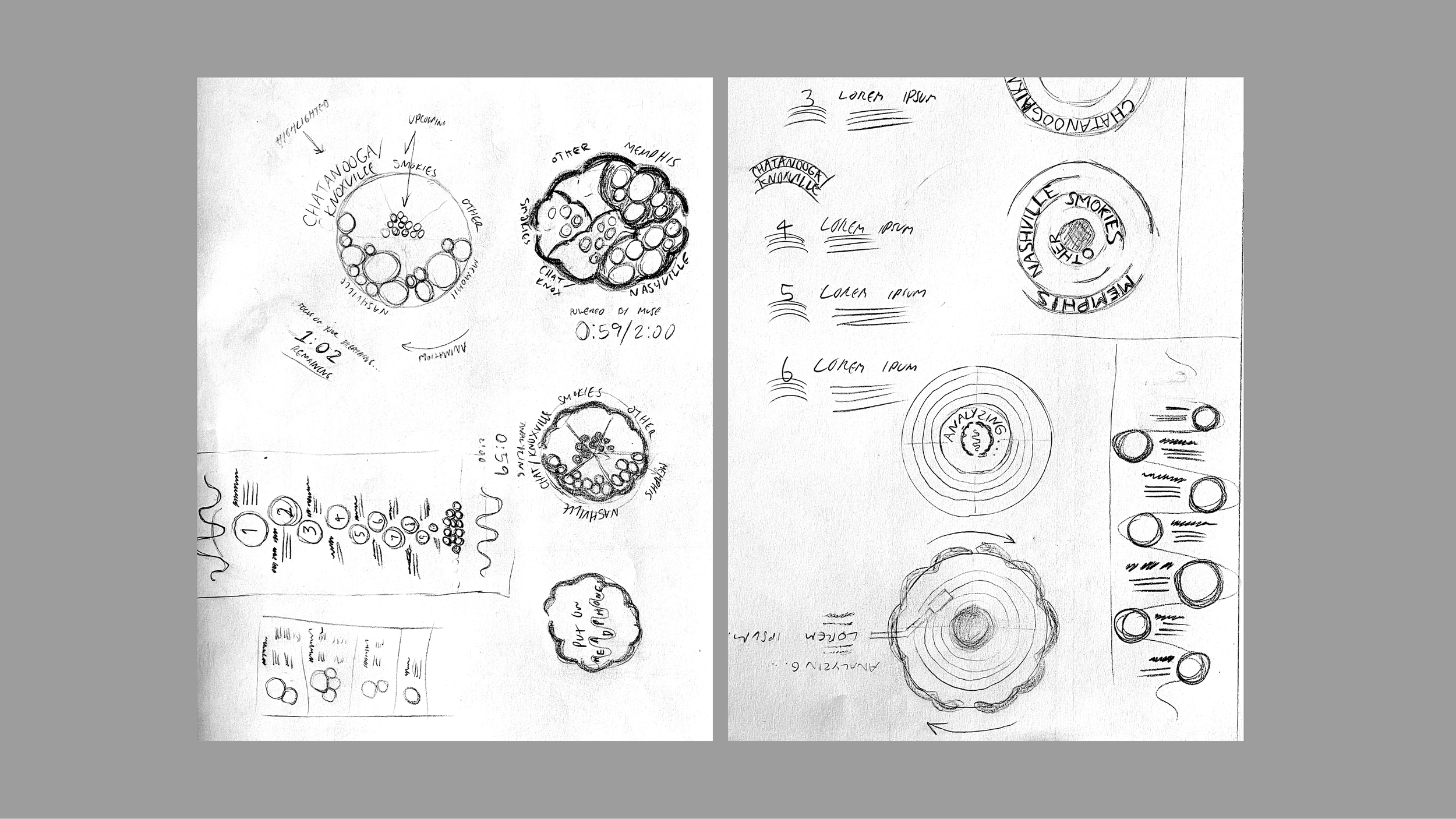
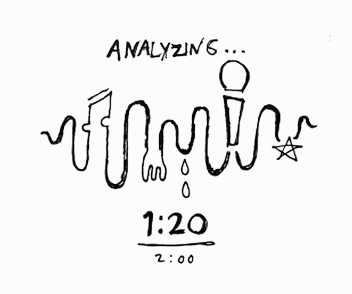
Early ideation sketches exploring different layouts, form factors and infographic design for both the iPad app and the final results content.
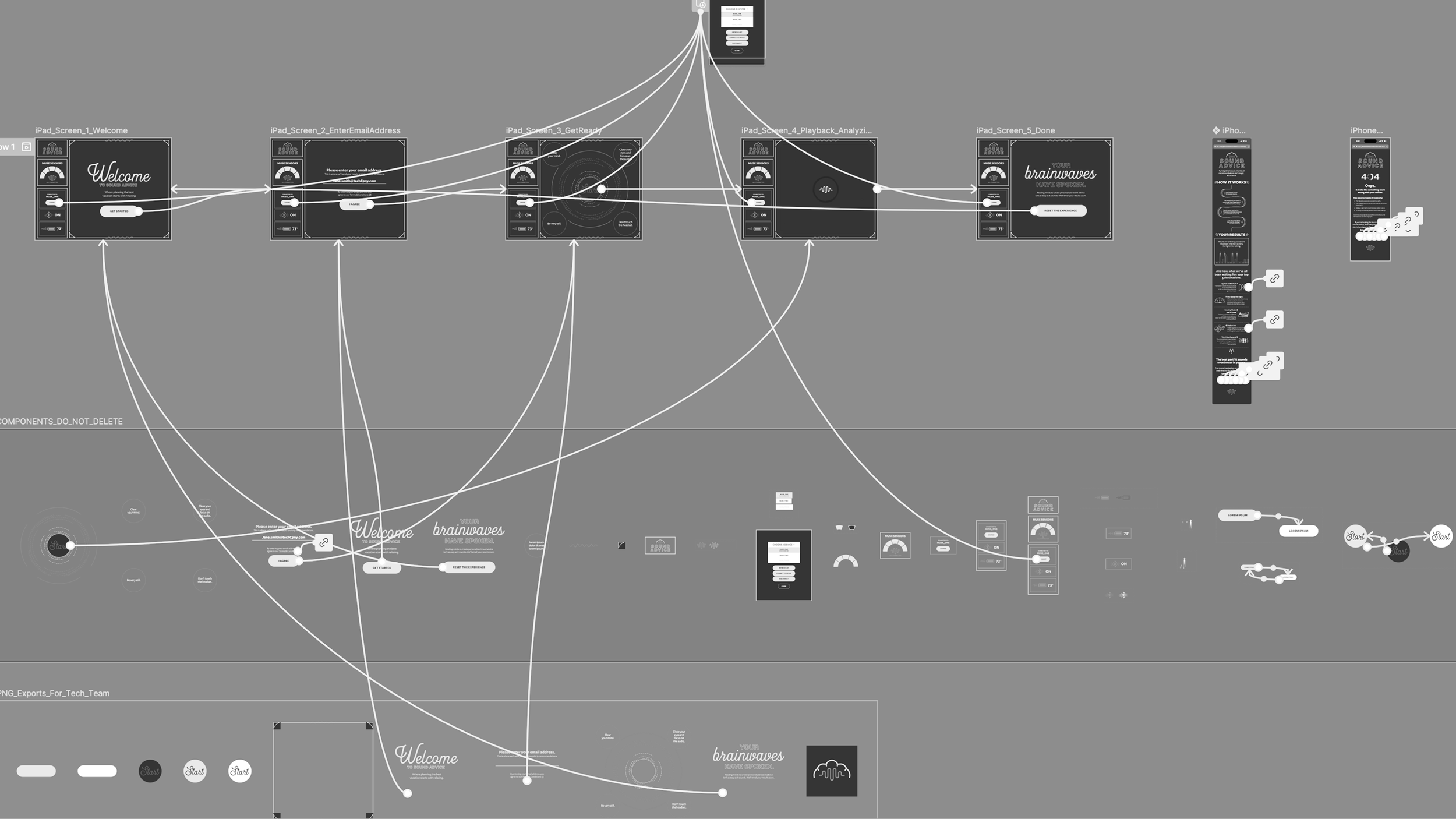
Using Figma prototyping tools to ideate, refine and test with several rounds of review and client approval.
Challenges
Because I hadn't previously worked with this creative team or the new campaign direction, aligning on the right aesthetic tone required extensive real-time brainstorming and iteration. The EEG technology itself was experimental for this use case, so data delivery needed active testing. I continuously revised the iPad's user journey in response to the technologists' daily trial-and-error findings, adapting design decisions as technical feasibility came into focus.
The Outcome
Despite a tight deadline, the activation launched and ran smoothly on-site. Guests spent nearly two minutes in the core EEG experience and another eight engaging with their personalized results — over 10 minutes of sustained brand engagement per participant. The activation's success led the Tennessee Department of Tourism to expand "Sound Advice" to additional tours and events months later, prompting a second phase of visual and experience updates to stay aligned with the evolving campaign. That momentum grew into an ongoing partnership between the client and VML, with additional activations added to the "Tennessee Sounds Perfect" campaign in the years that followed.
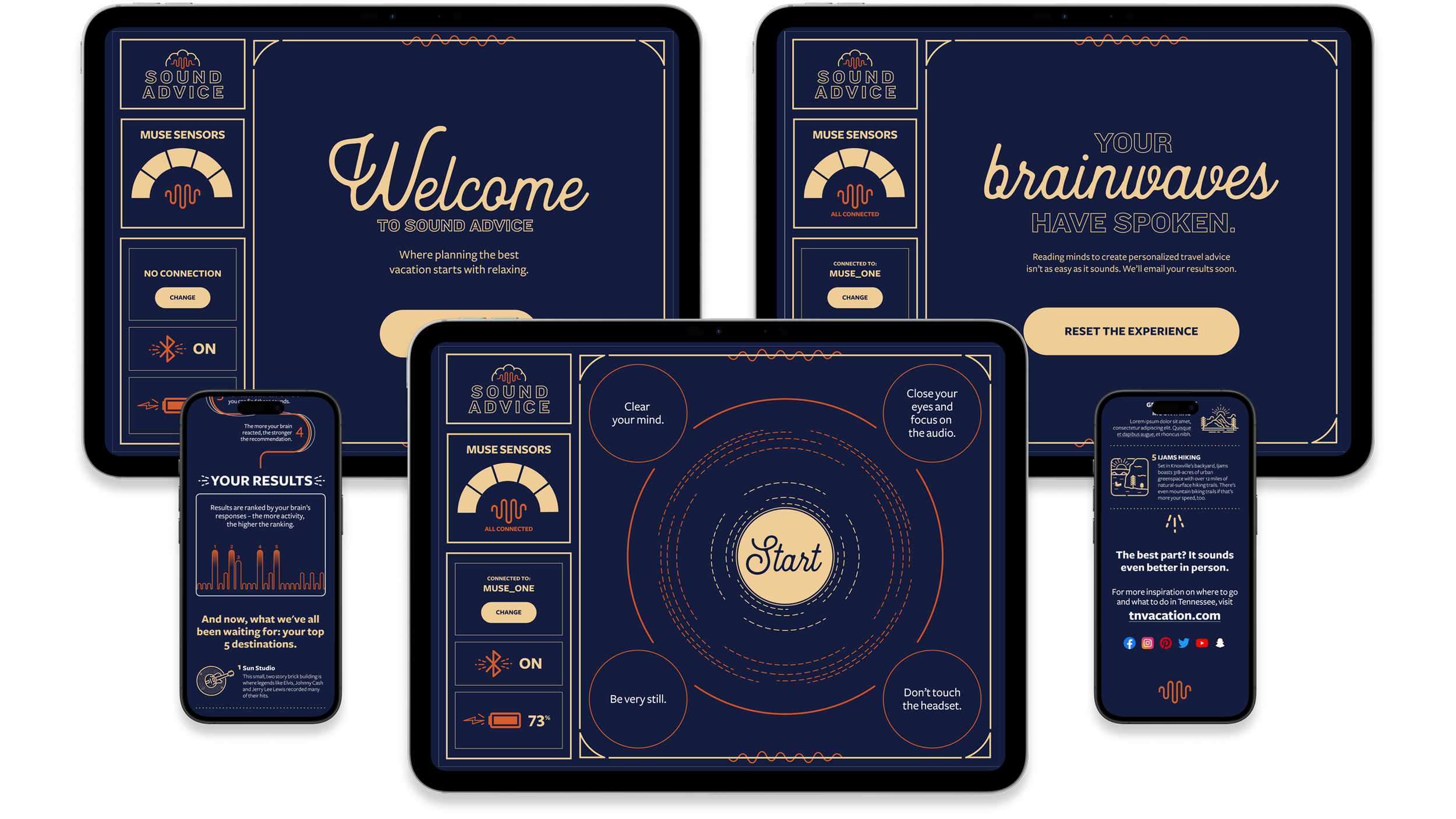
Final screens of the first version: both the in-booth app controls and the final results URL delivered to the user via their phone.
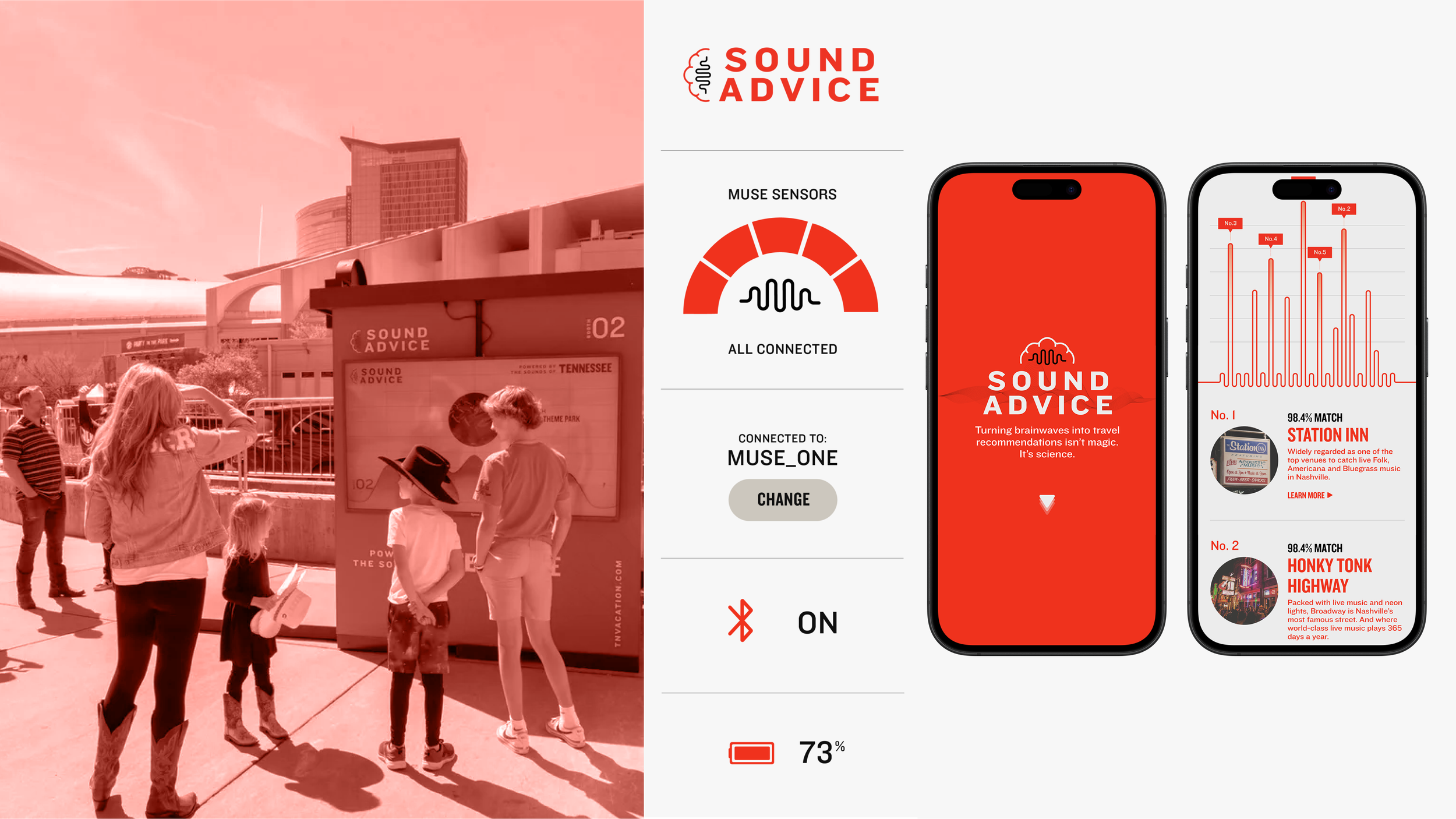
Left: The booth outside of an event, with a digital screen introducing users to the activation. Right: a modified, re-skinned second version of the iPad app controls and iPhone results page.
Takeaways
This project reinforced that using design to entertain and delight can be just as meaningful as solving more traditionally "serious" problems. It brought together my interests in emerging technology, graphic storytelling, music, travel, and in-person experience design, and reminded me how many different forms "improving people's lives" can take.