Tactile Elegance
A brand-led e-commerce redesign for a premium performance brand
VML + New Balance
The Ask
Transform New Balance's digital storefront into a brand-led retail platform that balances craftsmanship storytelling with a high-converting commerce experience.
My Role
Associate Director, Experience Design
Design System Structure, Accessibility, Cross-Functional Collaboration, Stakeholder Alignment, Communication
Results
10x web traffic vs. the prior year's collection launch • Follow-on RFP awarded to continue evolving the shopping experience
Background
New Balance aims to be the world's leading premium performance brand, crafting the highest-quality sports products for athletes and fans at every level. But its digital storefront didn't reflect that ambition or the brand's performance heritage. VML was asked to redesign New Balance's e-commerce experience. The goal was to balance commercial performance with storytelling, craftsmanship, and emotional connection. The result would be a brand-led retail platform that inspires customers, proves New Balance's craft, and builds trust, all while maintaining a high-converting shopping experience.
Team & Role
I joined as Associate Director of Experience Design on a team of roughly 8 to 10 designers spanning multiple levels of seniority, split across London and several U.S. time zones, with additional support from brand creative, strategy, client engagement, and project management. I came onto the project mid-stream, after the Reframe and Investigate phases were complete.
The team had already presented and gained approval on a conceptual design direction called Tactile Elegance, an aesthetic translating the feel of premium materials, considered construction, and human touch into digital form. My focus was integrating into the established brand, strategy, and UI visual design culture to provide UX guidance and refinement across the brand-led page designs.
A video showing part of the final launch design.
Approach
As design sprints kicked off to tackle different sections of the e-commerce experience, visual designers focused on executing the new aesthetic direction. My role centered on the Explore and Refine stages: concepting, prototyping, and testing solutions against strong principles of accessibility, design system structure, and CX best practices. The team collaborated across disciplines, offices, and time zones to keep the brand vision and user experience in balance.
For each section, I produced documentation, annotations, and structured feedback, working directly with visual designers to align on the best path forward. I used Figma to prototype solutions early, before formal revision and review sessions, so we could pressure-test ideas quickly. When new landing pages and "shoppable moments" needed clearer storytelling, I partnered with creative leads and used AI tools to quickly brainstorm and present user journeys and narrative content, helping guide the rest of the design team.
Before and after each sprint, I annotated and presented feedback through a feasibility, viability, and desirability lens to internal and external stakeholders, keeping the fast-moving process aligned across teams. As the project moved into delivery, I helped complete a substantial portion of the Figma design system and its documentation, supporting a clean handoff to New Balance's internal engineering and development teams.
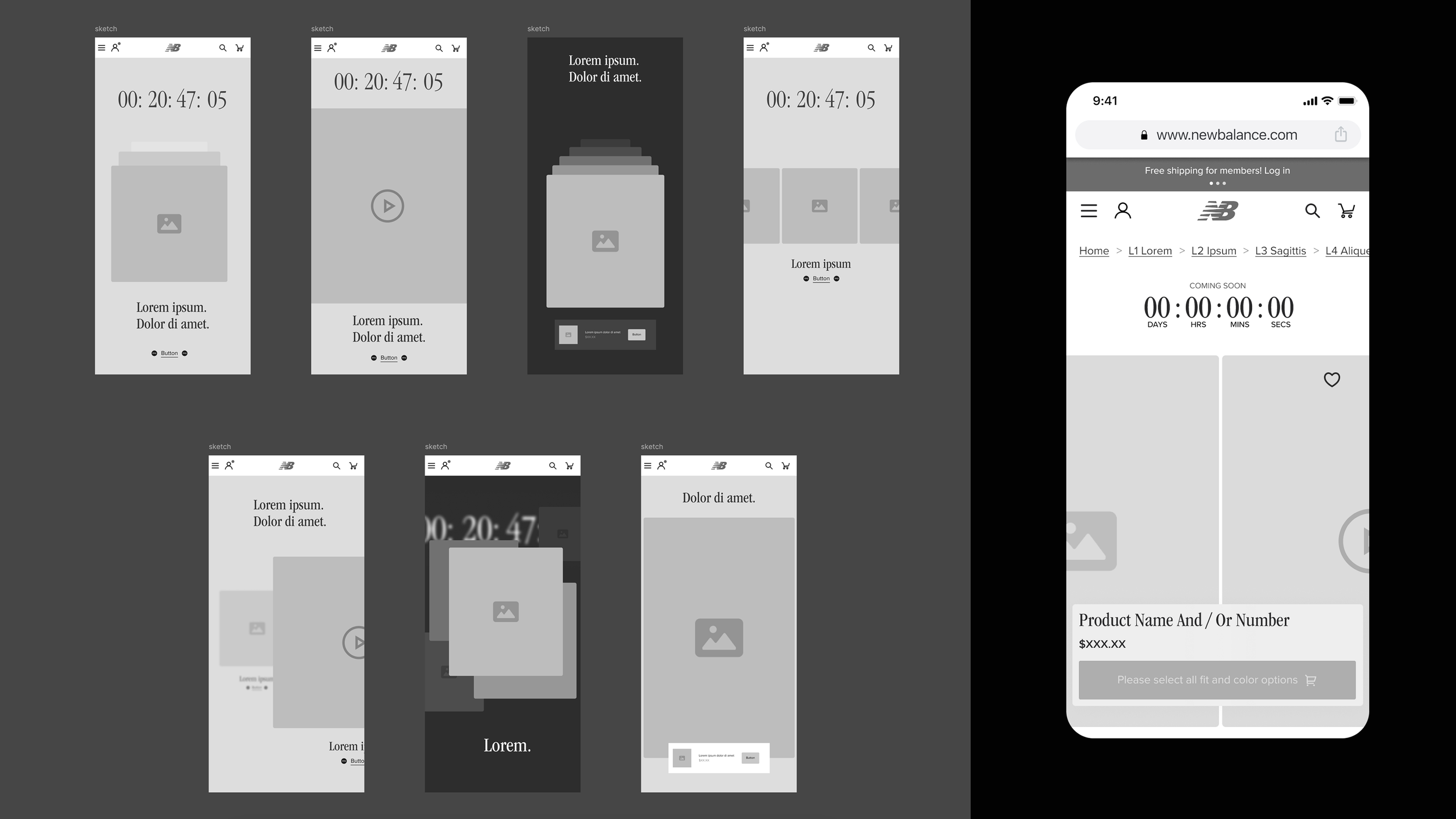
Left: Multiple explorations around immersive storytelling components for the Australian Open landing page. Right: early Figma lo-fi prototyping.
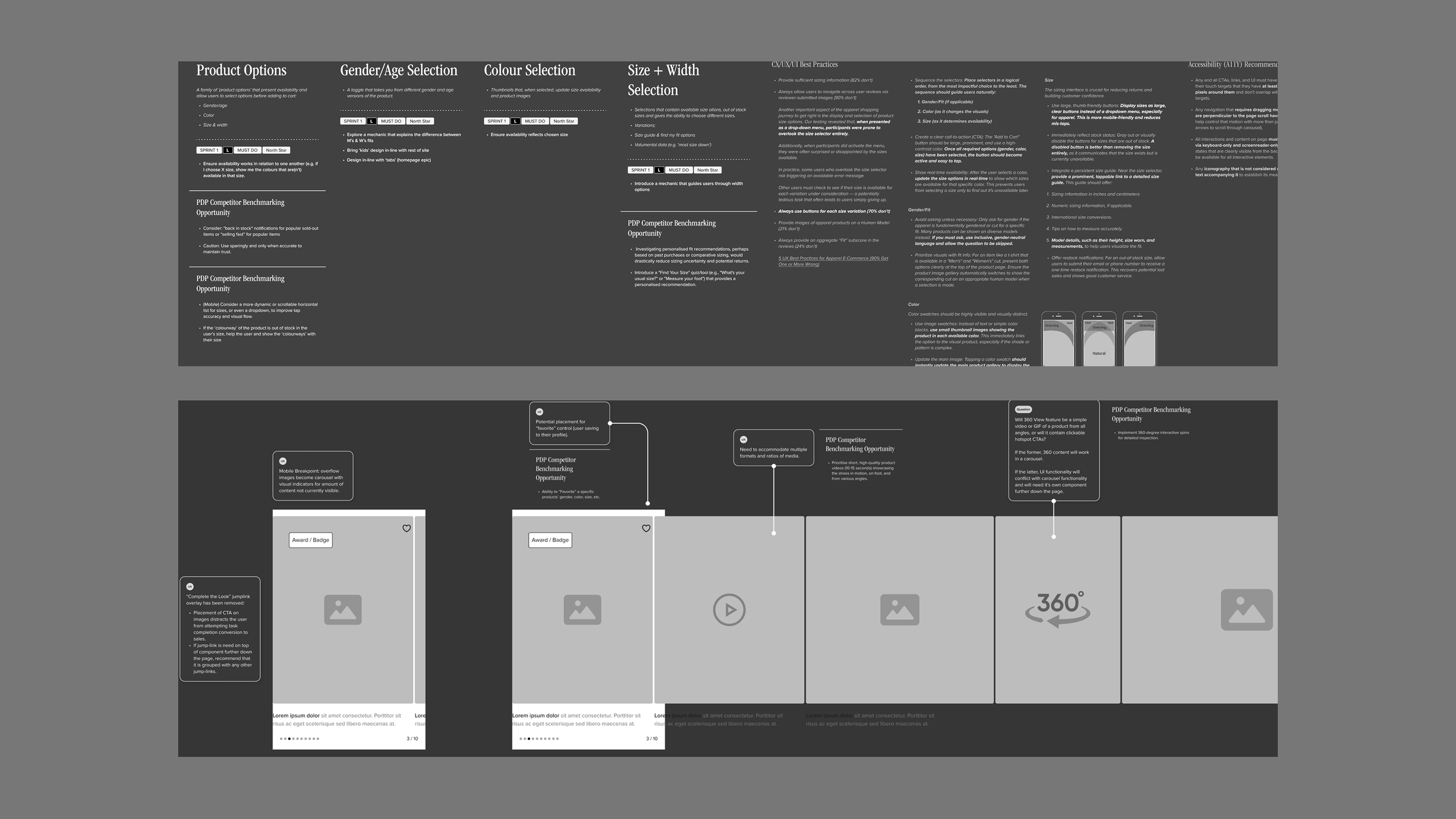
Annotations, documentation, and "best practice" notes focusing on a Product Detail Page (PDP).
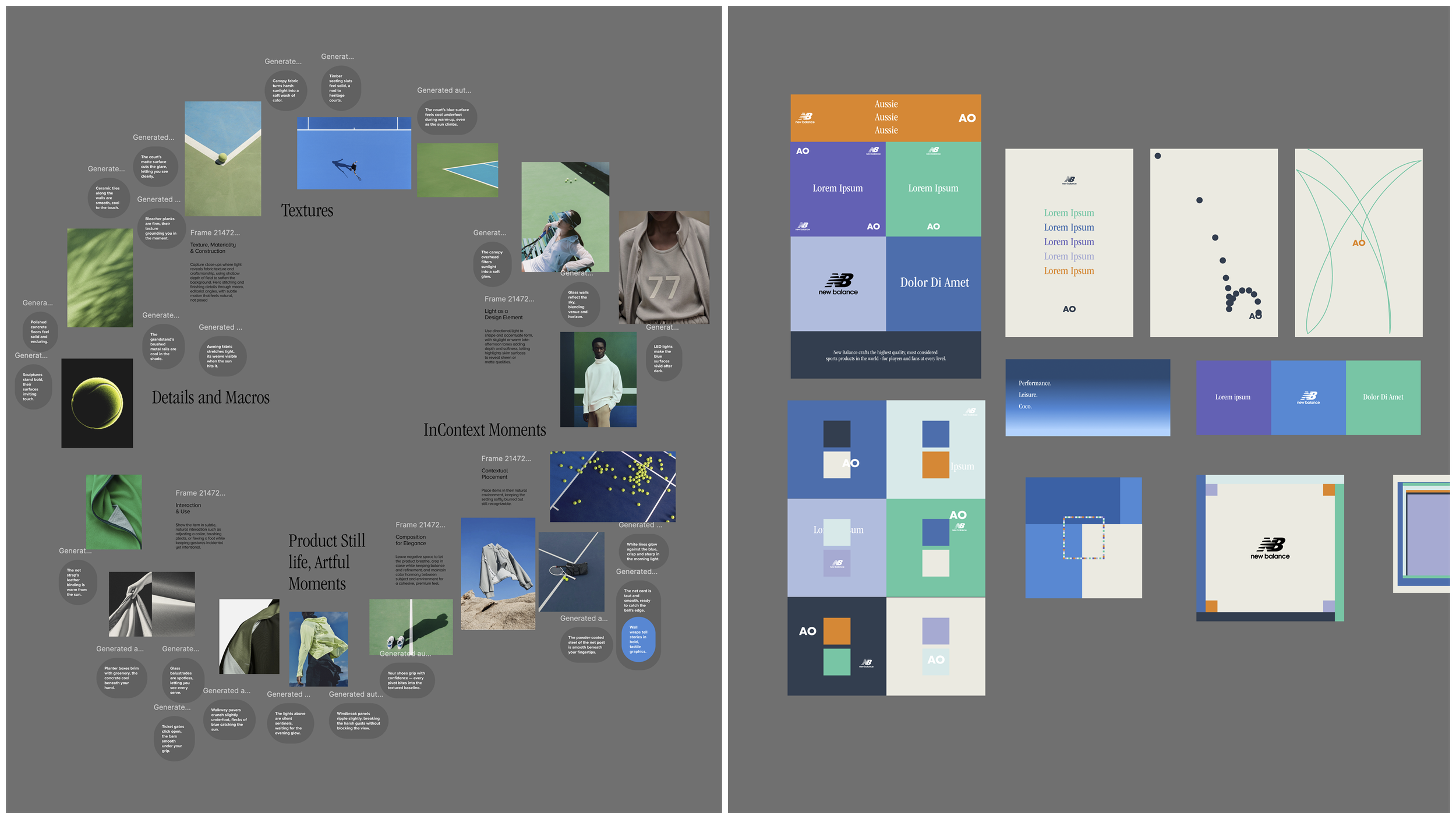
Left: Using Figma Make to brainstorm storytelling moments throughout a tennis championship live experience. Right: typographic and color/form explorations for mobile components.
Challenges
The team continually had to find the balance between a streamlined, minimal, high-fashion brand aesthetic and the practical demands of a high-volume retail experience serving broad, global audiences. On the client side, the size and capacity of New Balance's internal engineering team created scope and timeline bottlenecks, requiring daily communication and compromise to keep priorities aligned. Internally, coordinating across London, Seattle, Chicago, and New York time zones pushed the team to build a new way of working: one that could hand off phases of work cleanly and keep momentum and communication flowing around the clock.
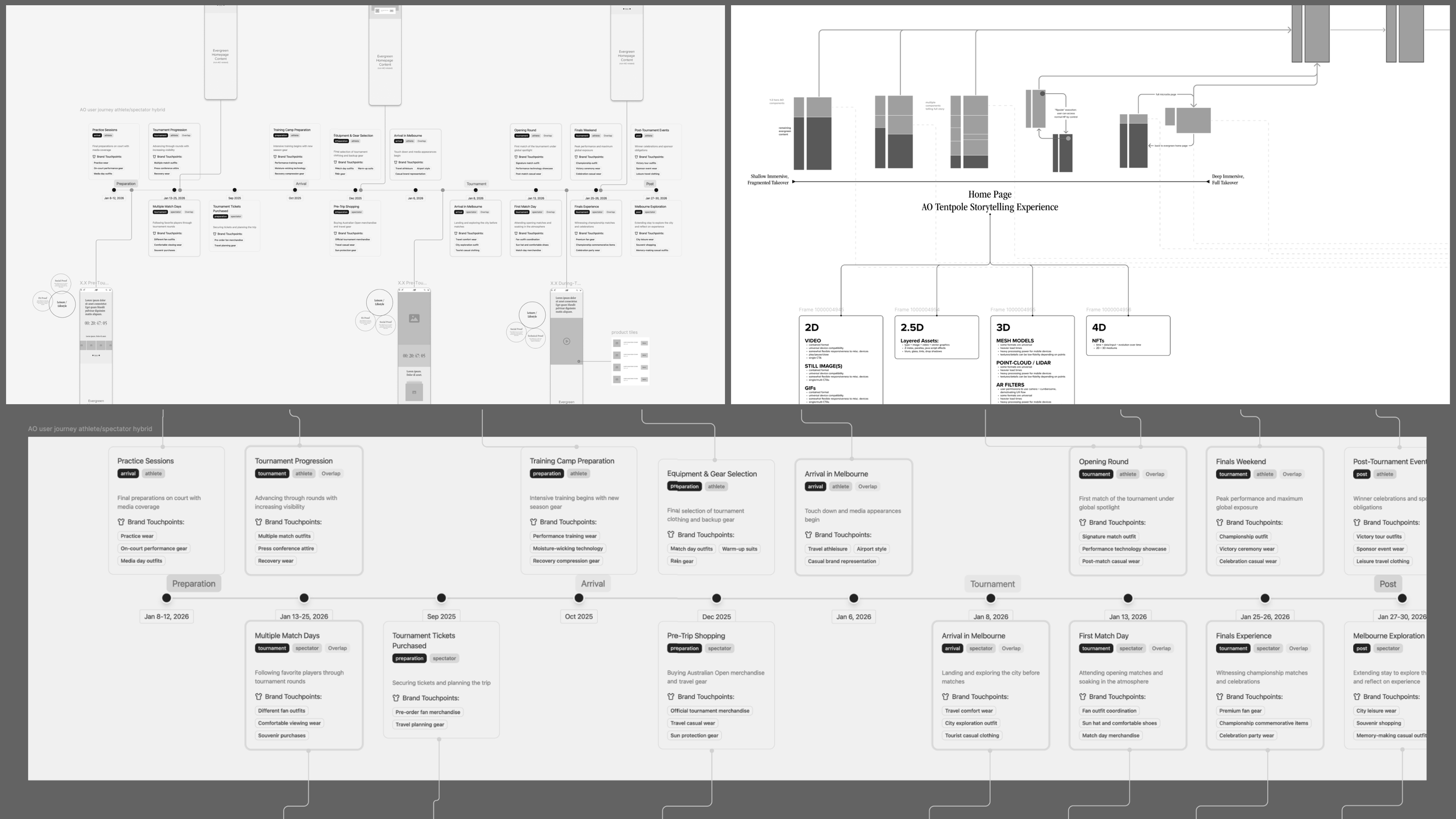
Several user journeys and touch-point maps ideating around storytelling moments throughout the e-comm experience.
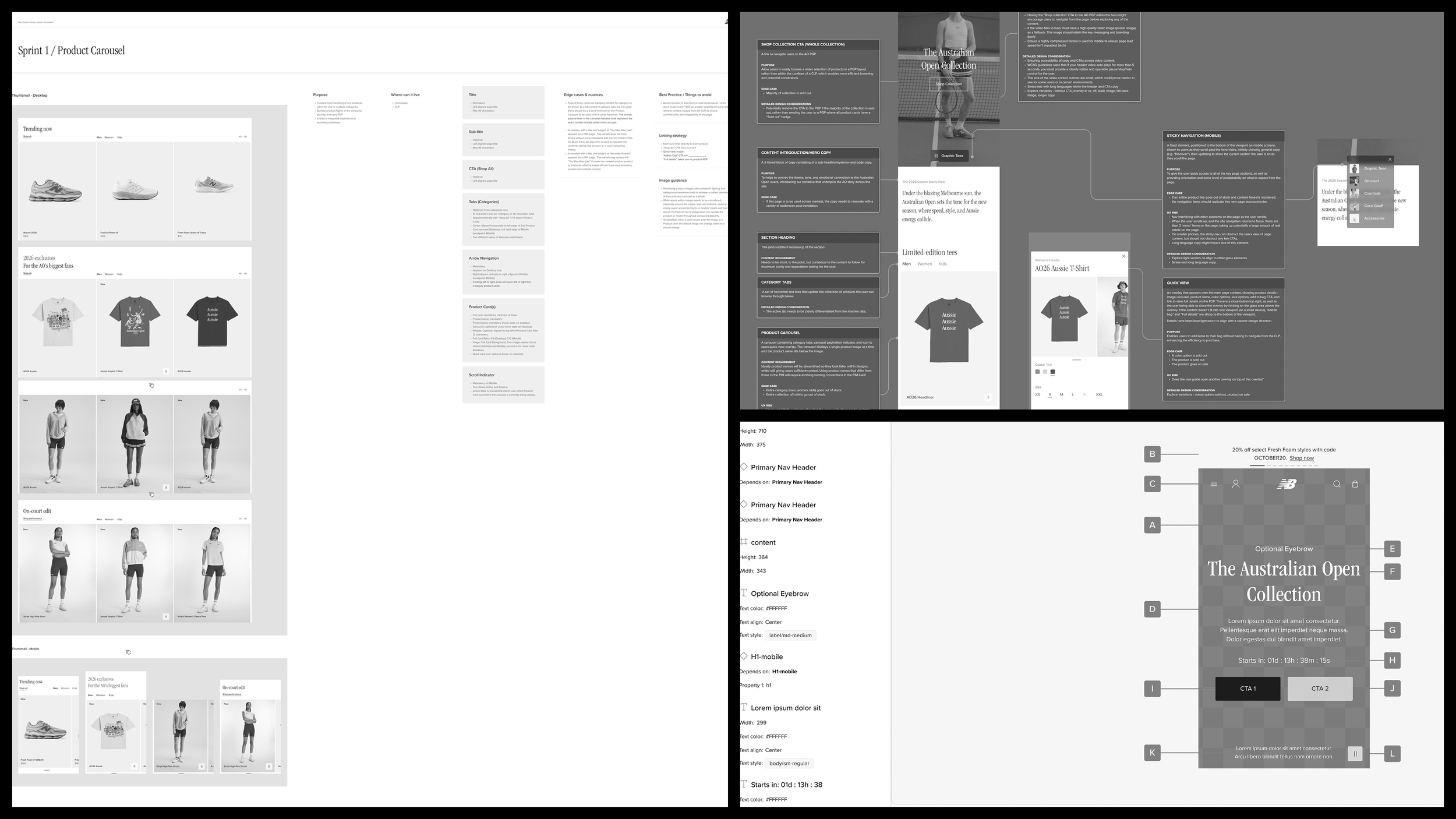
Left: Design System documentation using the new component designs. Right: Annotating details of the page structure and design system for design specs and implementation support.
The Outcome
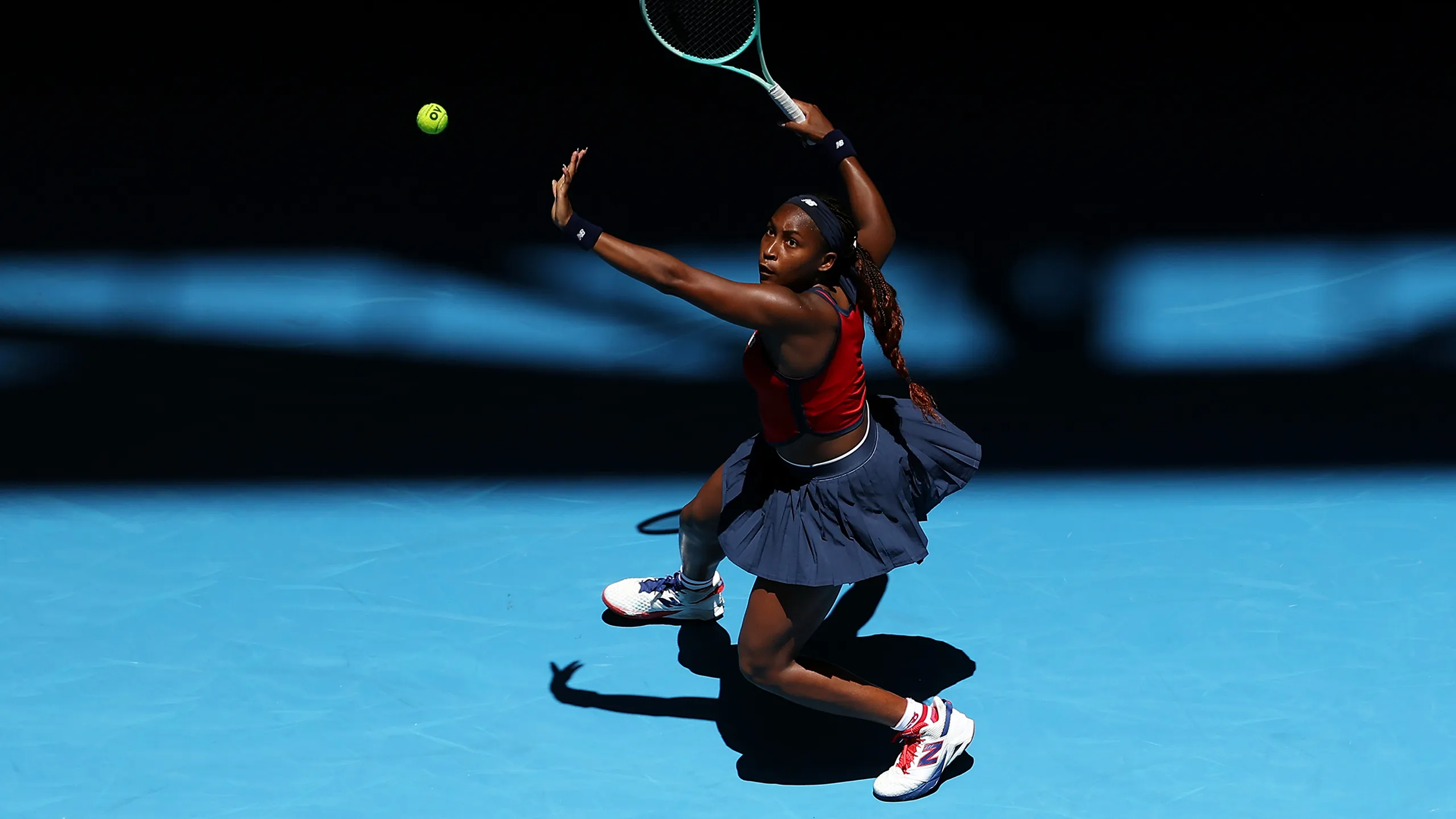
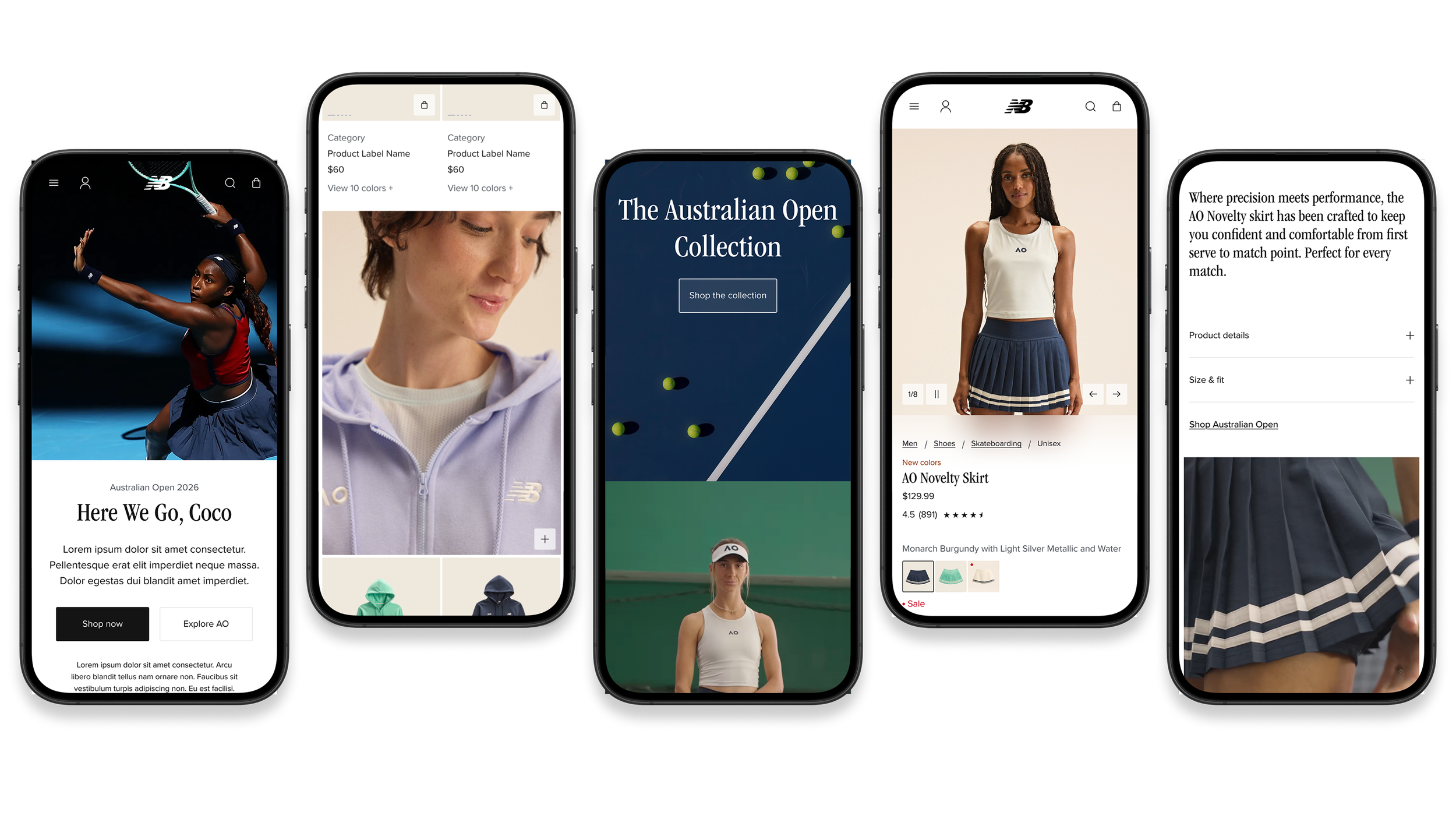
The redesigned experience debuted with a high-profile pilot launch tied to the 2026 Australian Open, showcasing the new brand expression alongside a partnership with Coco Gauff. The launch drove 10x the web traffic compared to the prior year's collection launch, along with strong positive feedback from the client. These results built immediate momentum heading into the next major brand moment and led to a follow-on RFP for VML to continue evolving the shopping experience.
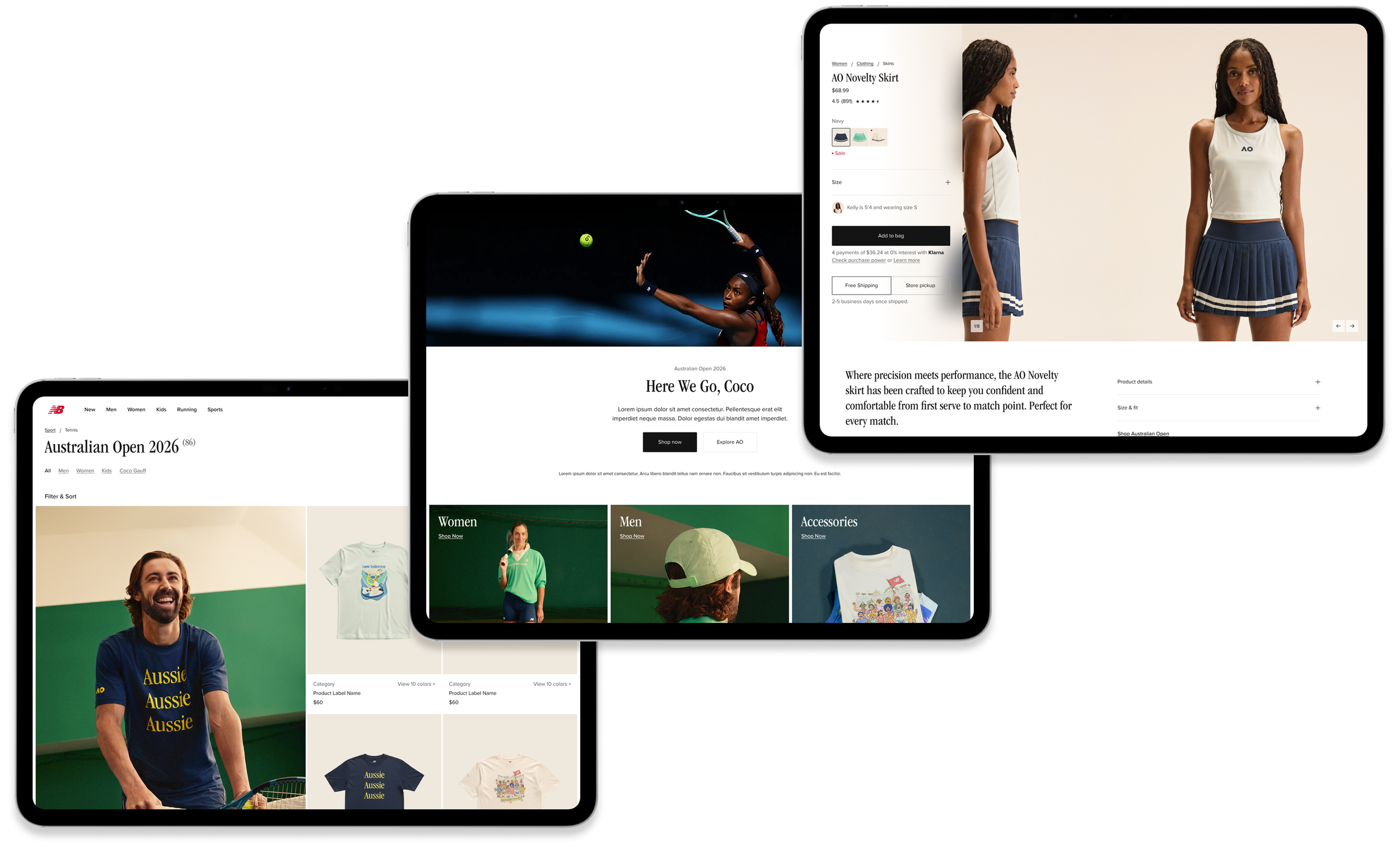
Several designs of the final page experiences (A.O. Landing page, Category Landing and Product Detail pages).
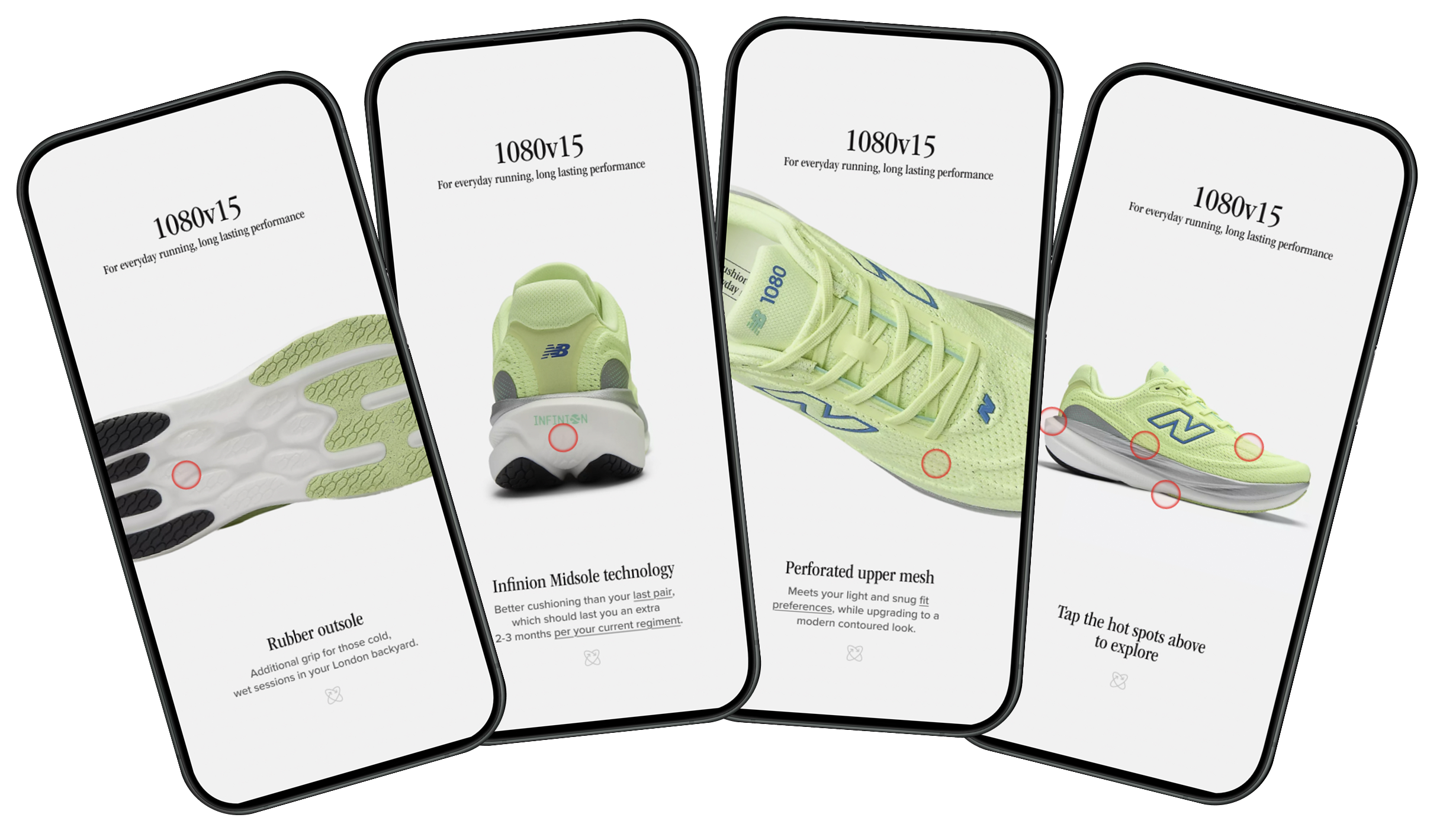
VML was asked to deliver another round of ideation for future phases of redesign, including more interactive 3D storytelling.
Takeaways
Running a project on Agile principles takes more than sprint ceremonies. It takes shared understanding at every level of the client and design teams, including partners who are newer to iterative design and the pace it demands. I also saw how differently a brand-led visual team and a CX-focused UX team can read the same brief. The lesson I carry forward: make the goals and expected outputs of each sprint and phase explicit from day one, so every discipline is designing toward the same outcome. It saves significant time and cost down the line.