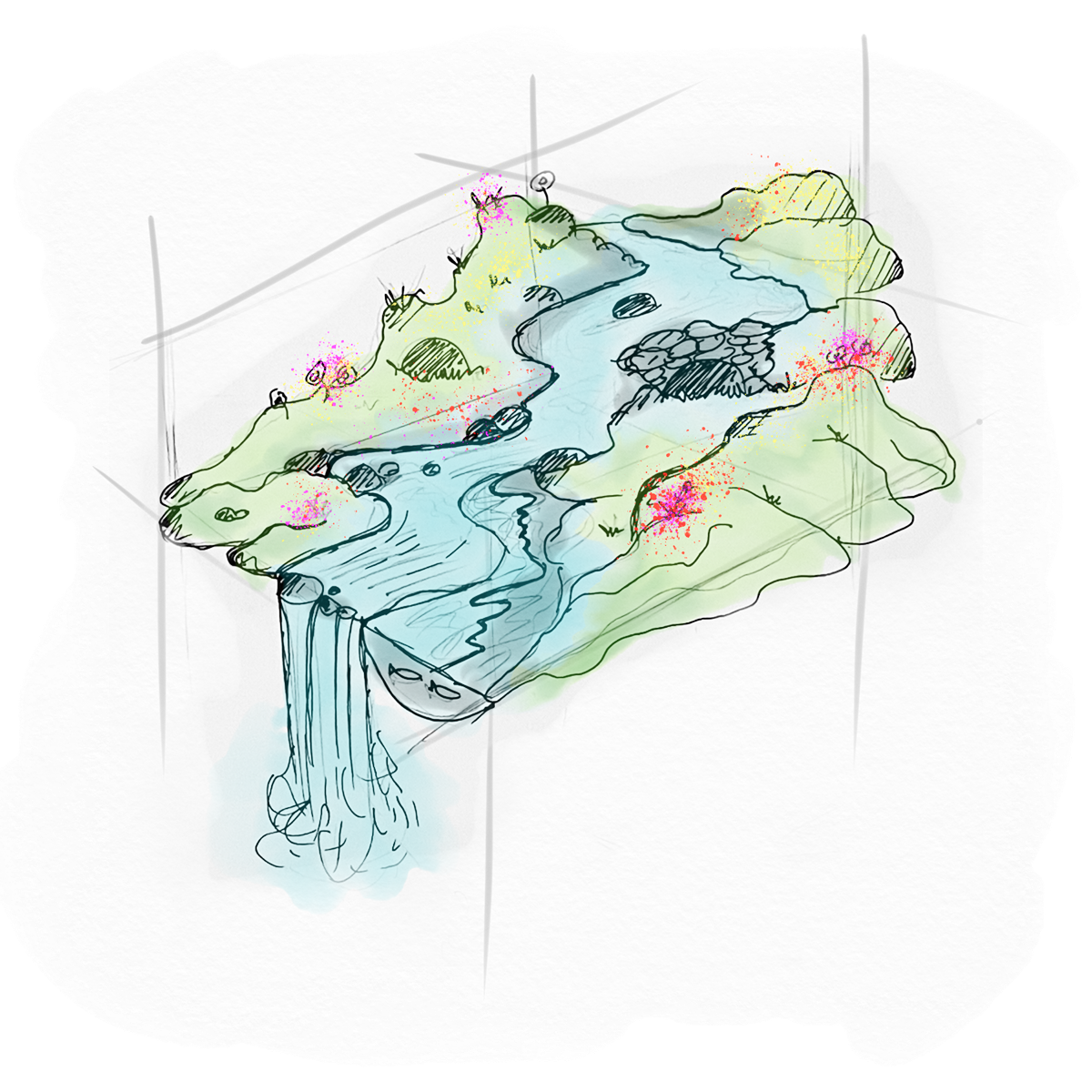
Give Me the Future
An immersive virtual concert experience for an album launch
VML, SubVRsive, EMI, Epic Games, WPP
The Ask
Create a one-of-a-kind immersive customer experience bringing Bastille's new album to life at the intersection of music and emerging technology.
My Role
Sr. User Experience Designer
Concepting, Journey Mapping, 3D Prototyping, Narrative Framing, Cross-Functional Collaboration
Results
Delivered a virtual concert experience in partnership with Epic Games • Final direction shaped by the team's creative vision despite major scope pivots
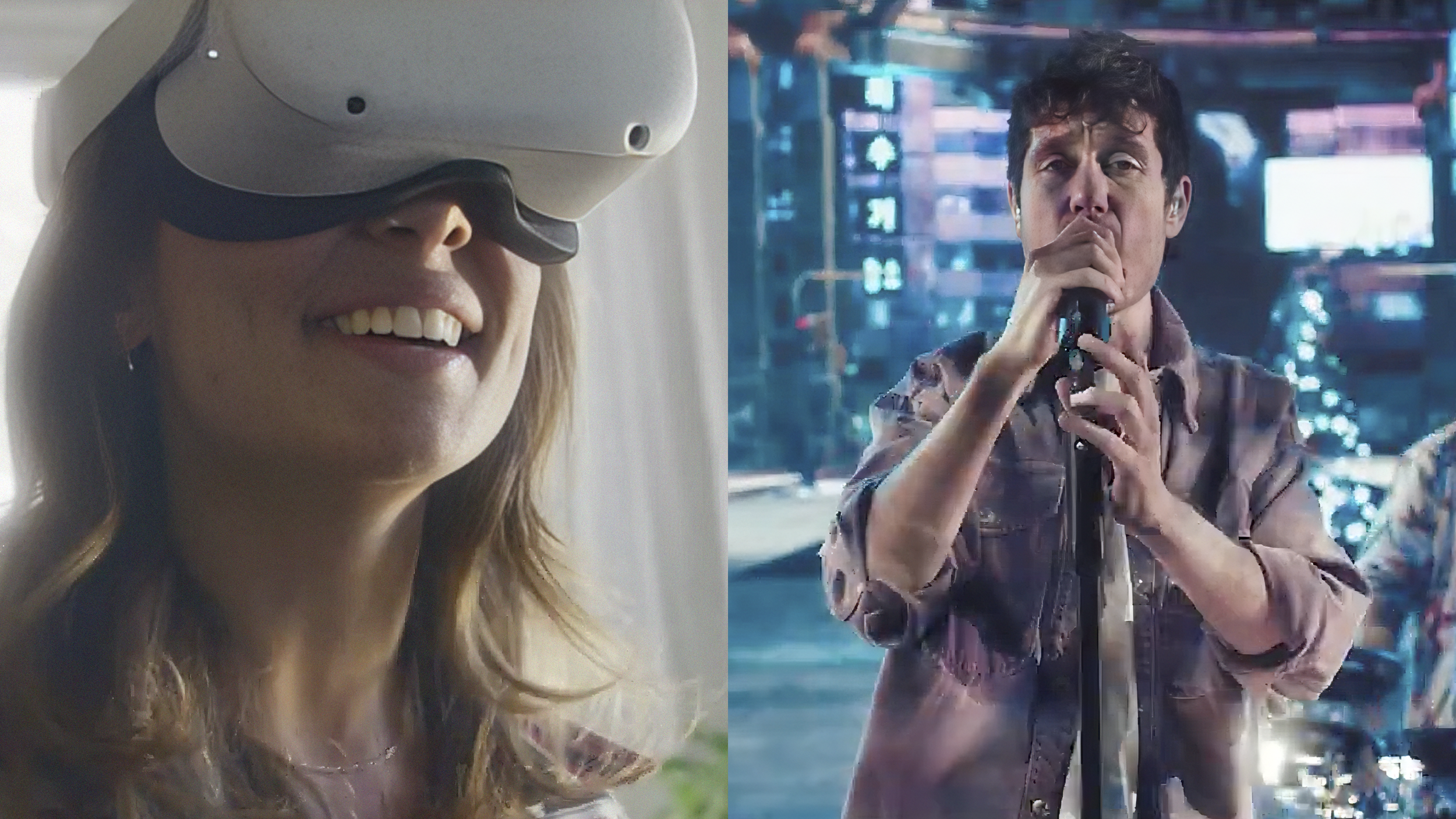
Stills from the final trailer of the experience, released on the Oculus store.
The Ask
In July 2021, the record label EMI and their signed rock band Bastille approached VML to create an innovative, thought-provoking, one-of-a-kind customer experience bringing the concepts, music, and themes of Bastille's new album, Give Me the Future, to life. The ask centered on amplifying ideas through purposeful technology that seamlessly tied to the album's overarching narrative.
For EMI, the goal was to connect fans closer to the artist, music, and performance than ever before while exploring the future of music production, promotion, and performance. For Bastille, it was a chance to release the world's first unique immersive music experience alongside an album launch, at the intersection of music and technology. For VML, it was an opportunity to showcase capabilities in virtual production, innovation, and future transformation.
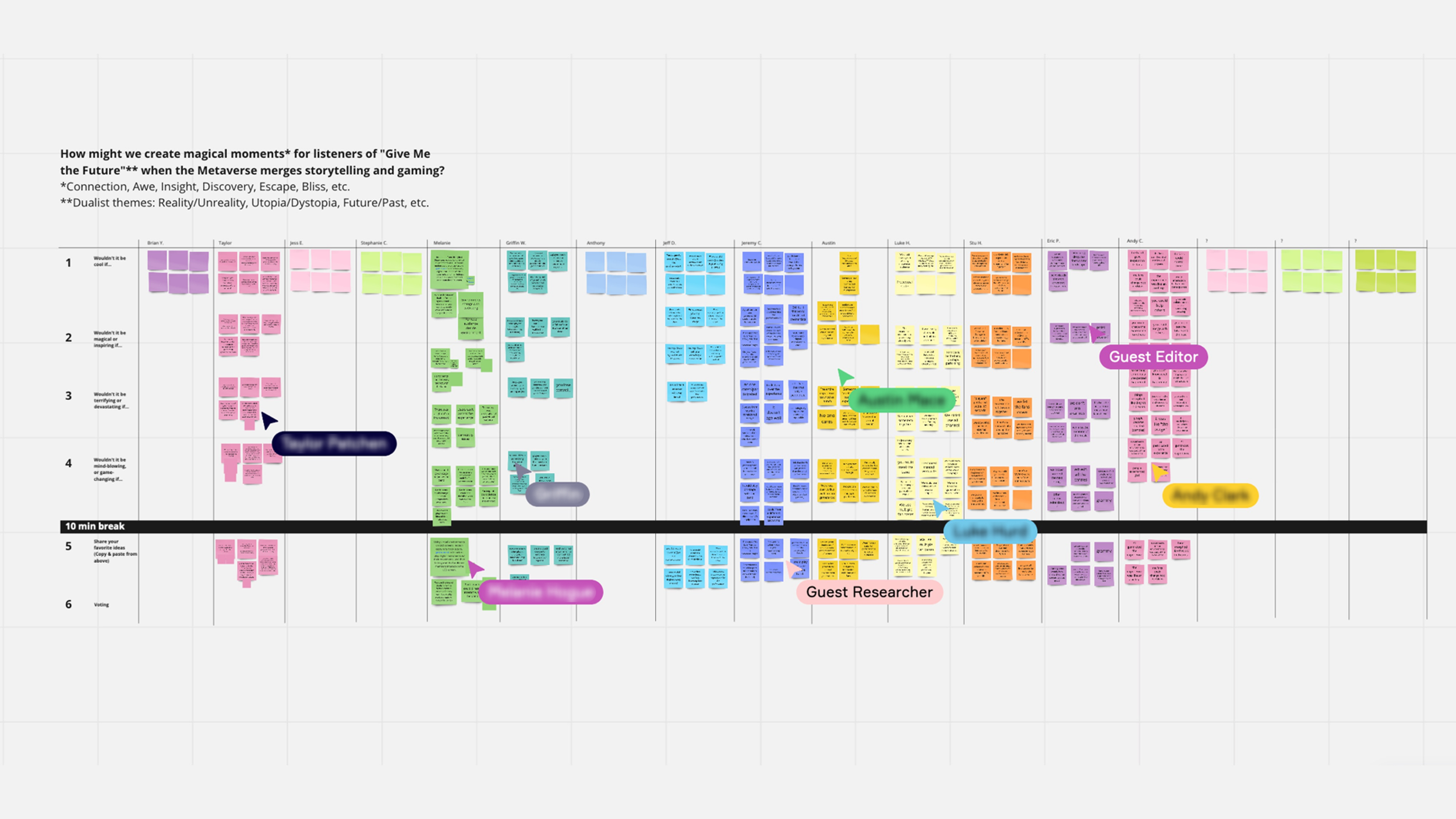
One of multiple early workshop sessions between VML, SubVRsive and WPP, exploring “How Might We” central question formation.
My Role
I was one of several Senior User Experience designers on VML's team, working alongside 6-10 design leads, creative leads and project management as part of a small, innovation-focused group tasked with concepting, ideating, and helping execute the experience.
SubVRsive, a boutique AR/VR agency, led engineering and technical build-out. EMI and Bastille served as the primary clients, with additional partnership resources from Epic Games, Unreal Engine, and WPP.
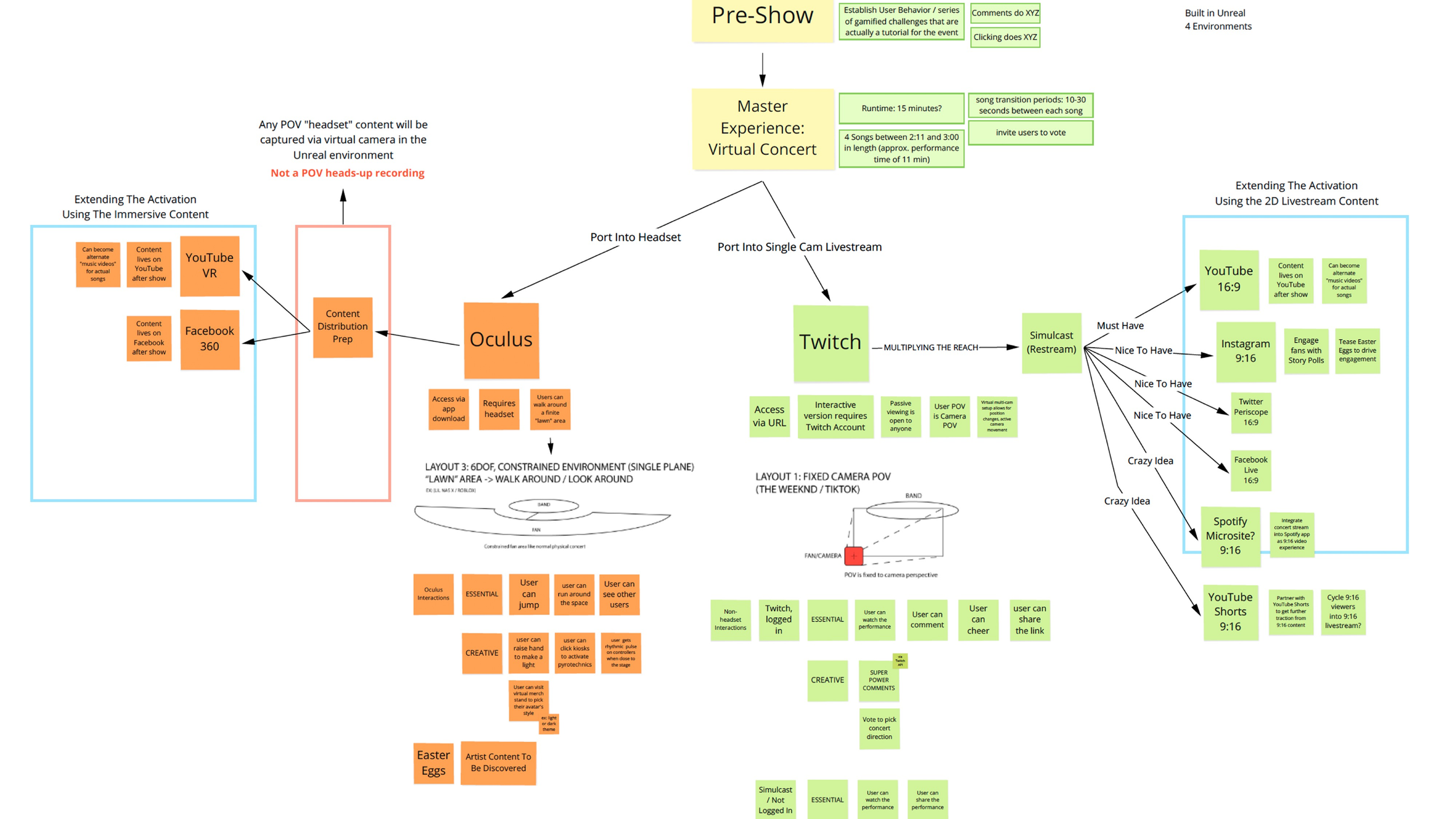
An experience mapping diagram in the early stages, thinking thru the feasibility, viability and desirability of multiple platforms, technologies and operational systems.
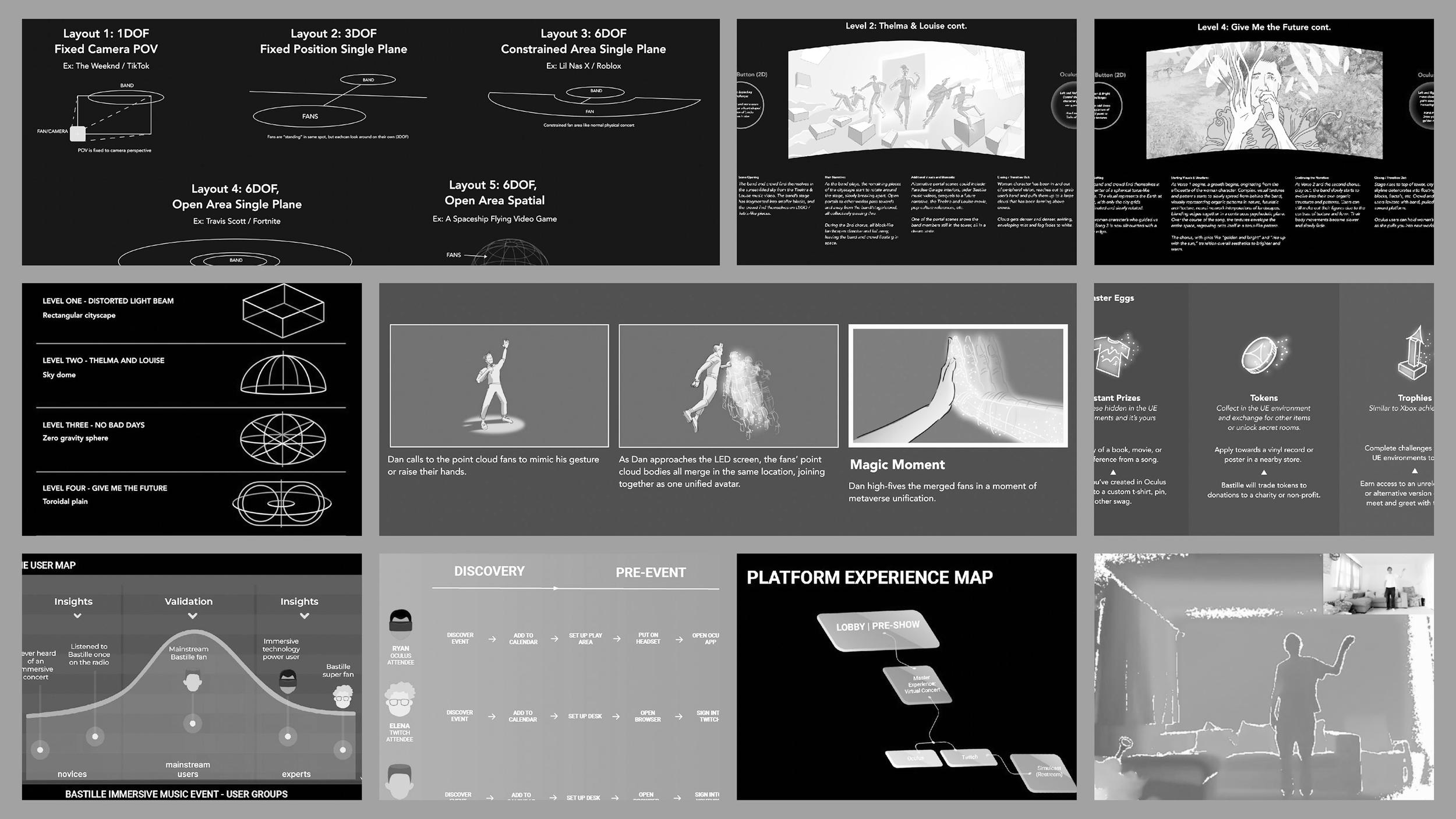
A small collection of many pages of multiple documents focused on the experiential and event design phases, as well as conceptual and narrative ideation phases.
Approach
After pitching multiple concepts to EMI and VML, the team landed on an initial direction: a live gig performed in front of a crowd, captured via LIDAR and streamed into a metaverse environment. I helped shape the plan to capture the band's performance in both 2D and 3D volumetric formats for use in a virtual-reality immersive experience, producing user flows, user journeys, and documentation covering UK production logistics, 3D environment design (for both LED screen and VR world-building), Kinect-driven volumetric capture, platform research, and the interactive narrative structure.
Working closely with SubVRsive to bring an early prototype concert experience to life, I also iterated through hundreds of sketches, concept art illustrations, and rapid prototypes with teammates, and helped build 3D objects and environments in Blender and Gravity Sketch.
Moving into pre-production for the band's November performance shoot outside London, I focused on defining the vision and scope for a live metaverse concert. As scope, resourcing, and budget shifted throughout, I anchored the vision around four songs from the upcoming album to keep the platform and experience direction grounded.
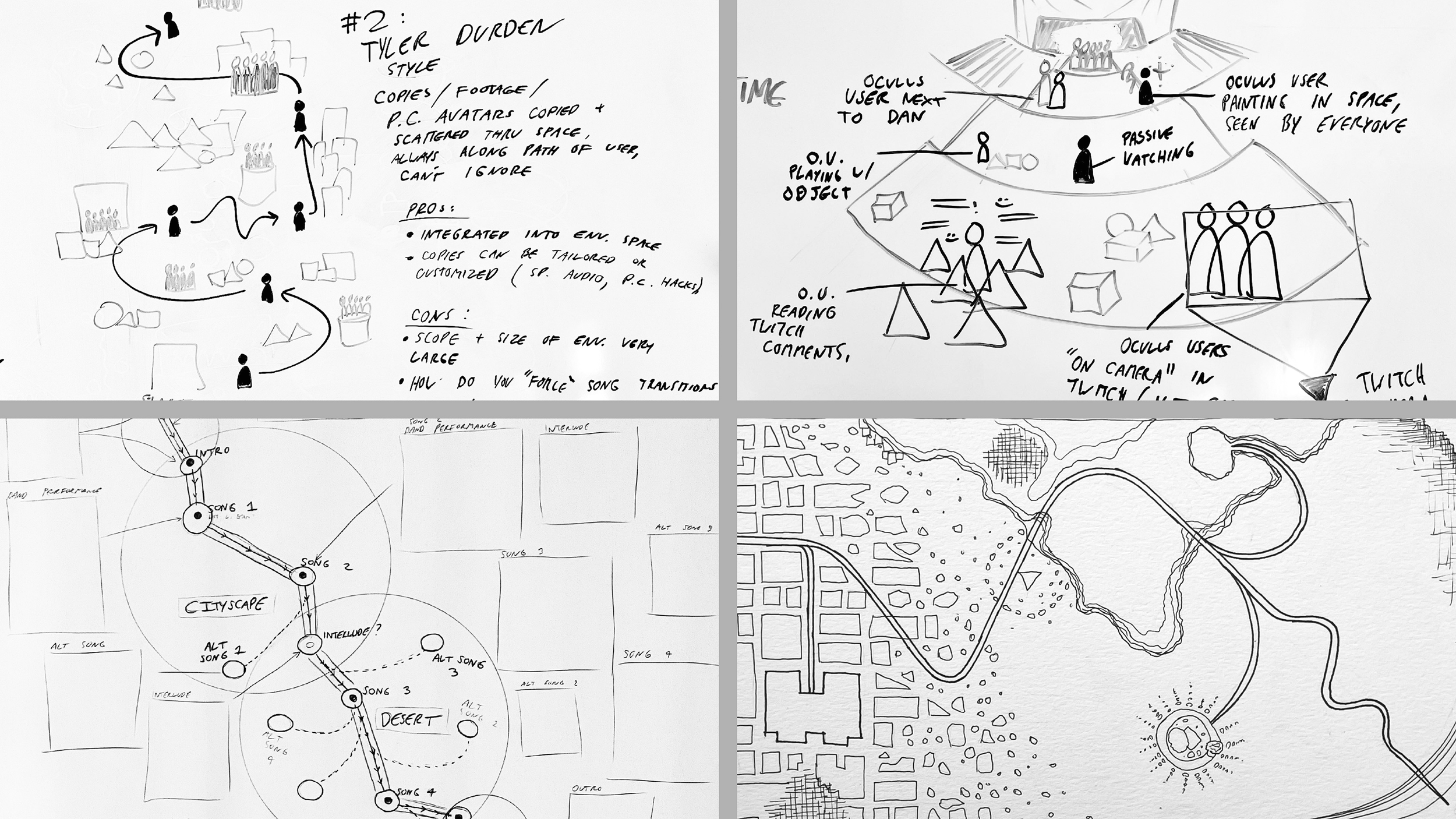
White-boarding sketches thinking thru several game design concepts after pivoting from a passive event experience to a gamified active experience.
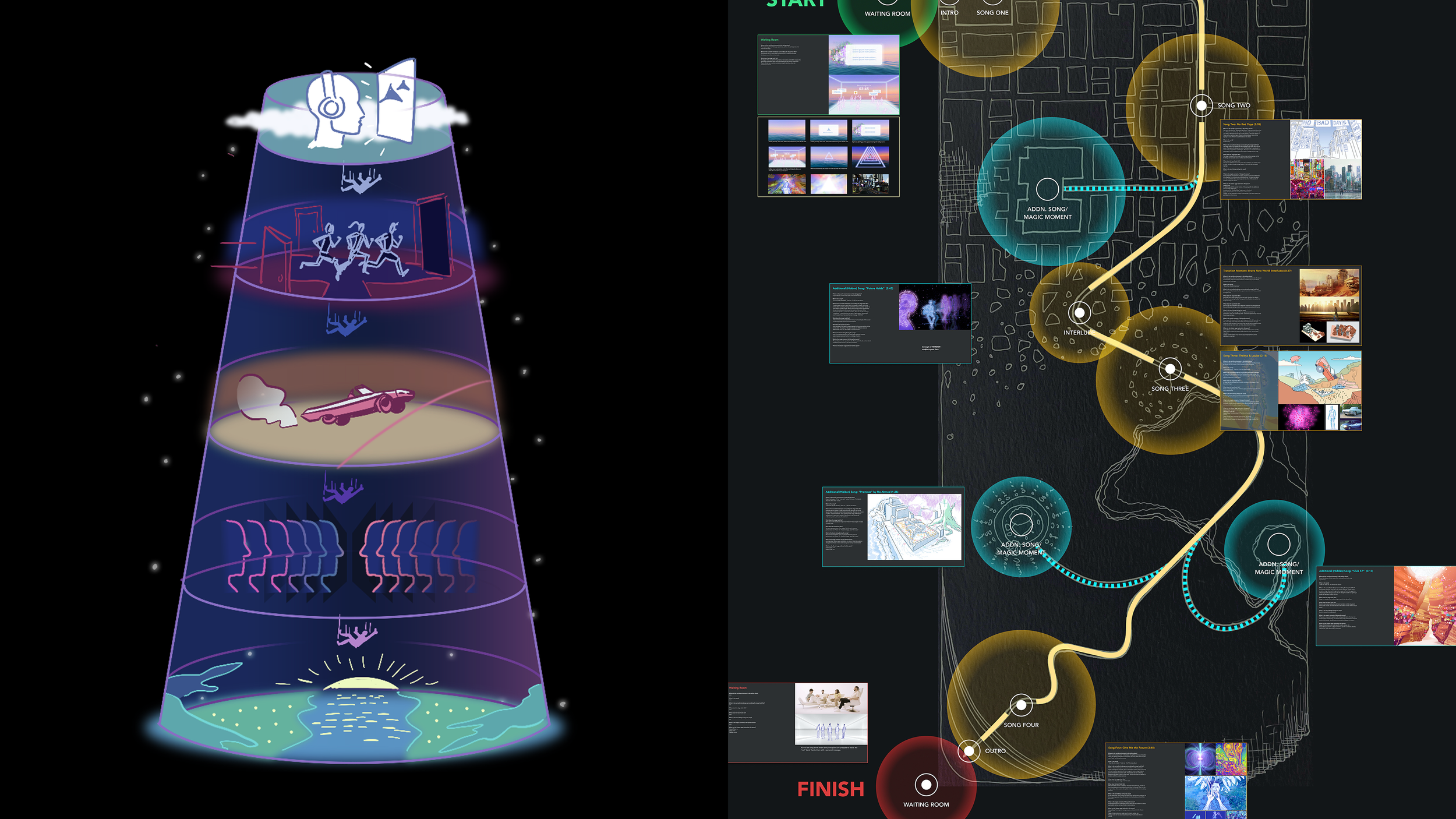
Mid-level fidelity sketches of a potential gamified experience. Left: communicated the multiple stages of the concept execution based on album songs. Right: overhead map of a possible game environment, with a user path showing an “on-rails” happy-path.
Challenges
Following the London shoot, the team hit significant setbacks. Volumetric capture of the band's performance came back below the quality bar and was scrapped in favor of 2D video footage displayed on in-world monitors within the Unreal Engine environments. The infrastructure required for a multiplayer MetaQuest experience also proved infeasible, forcing a pivot to a scaled-down, single-player, passive experience.
I adapted by re-entering the explore phase of the process, generating new gameplay narrative concepts, 2D and 3D assets, additional environments, and a revised UX/UI approach to support the new direction. Most of my time went into environment concepting, asset production alongside other artists and designers, and syncing audio and video into a visually cohesive, fixed experience.
Several months in, stakeholder disagreements over music licensing and copyright introduced further delays, ultimately pausing project deliverables.
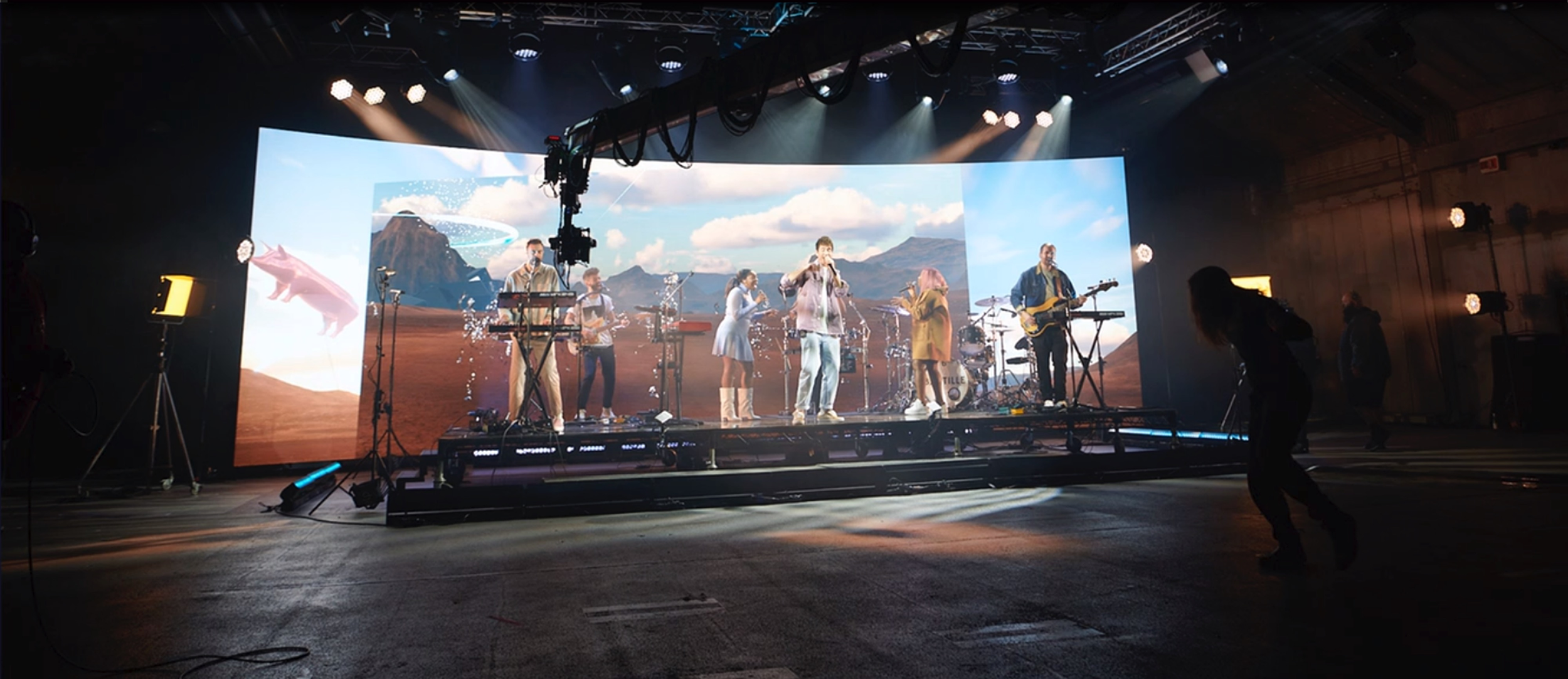
On-site capture of the band Bastille in front of custom LED visuals created in Unreal Engine. The performance was recorded in 2D, as well as attempted to be captured in 3D with LIDAR.
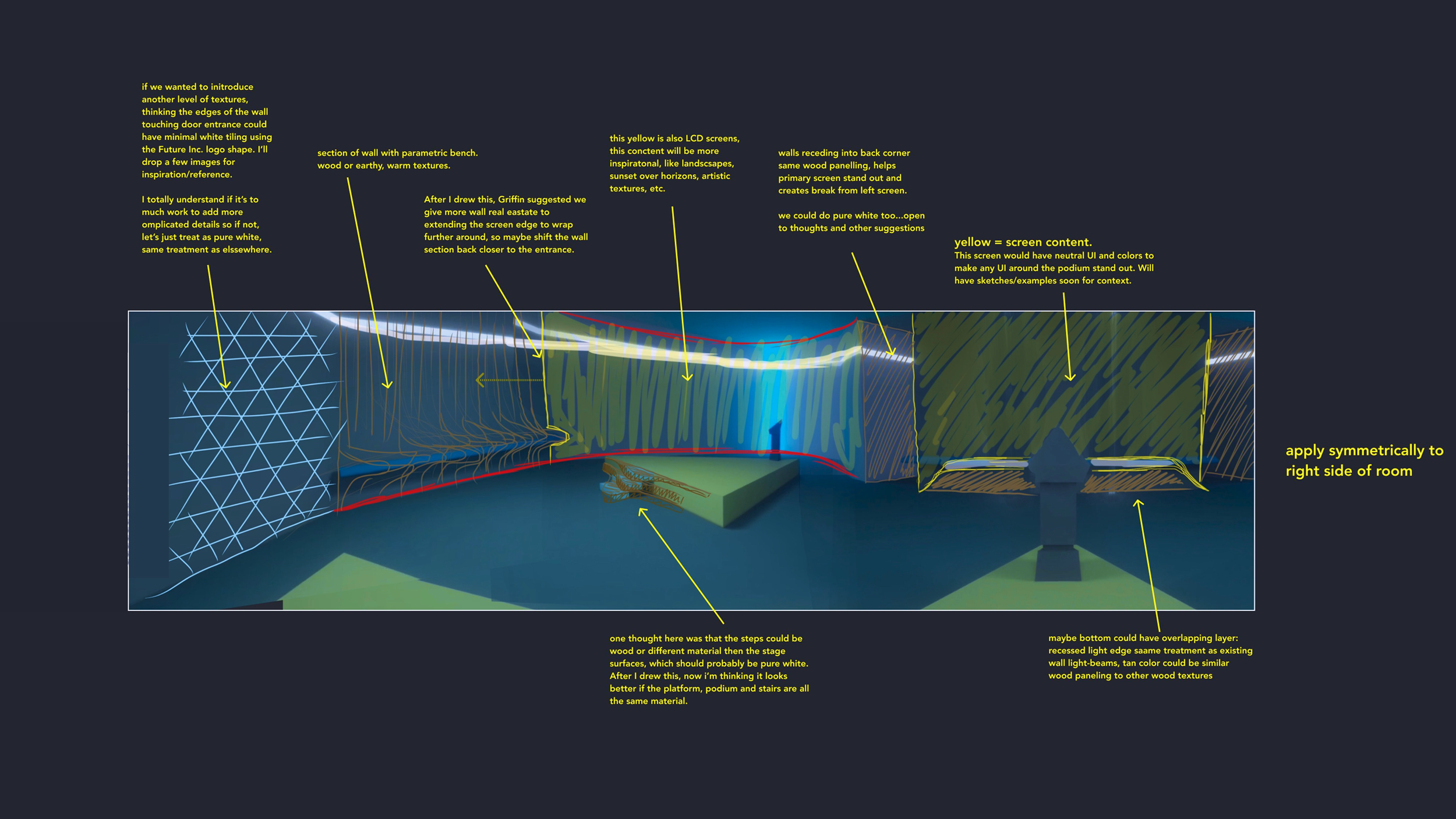
A diagram of notes and feedback regarding a VR “waiting room” which was intended to introduce the user to the subsequent VR experience.
The Outcome
Due to resourcing volatility and project management challenges beyond the design team's control, the final experience shipped as a simplified, streamlined version of the original vision, delivered in partnership with Epic Games — but one still shaped heavily by my team's creative direction and narrative approach.
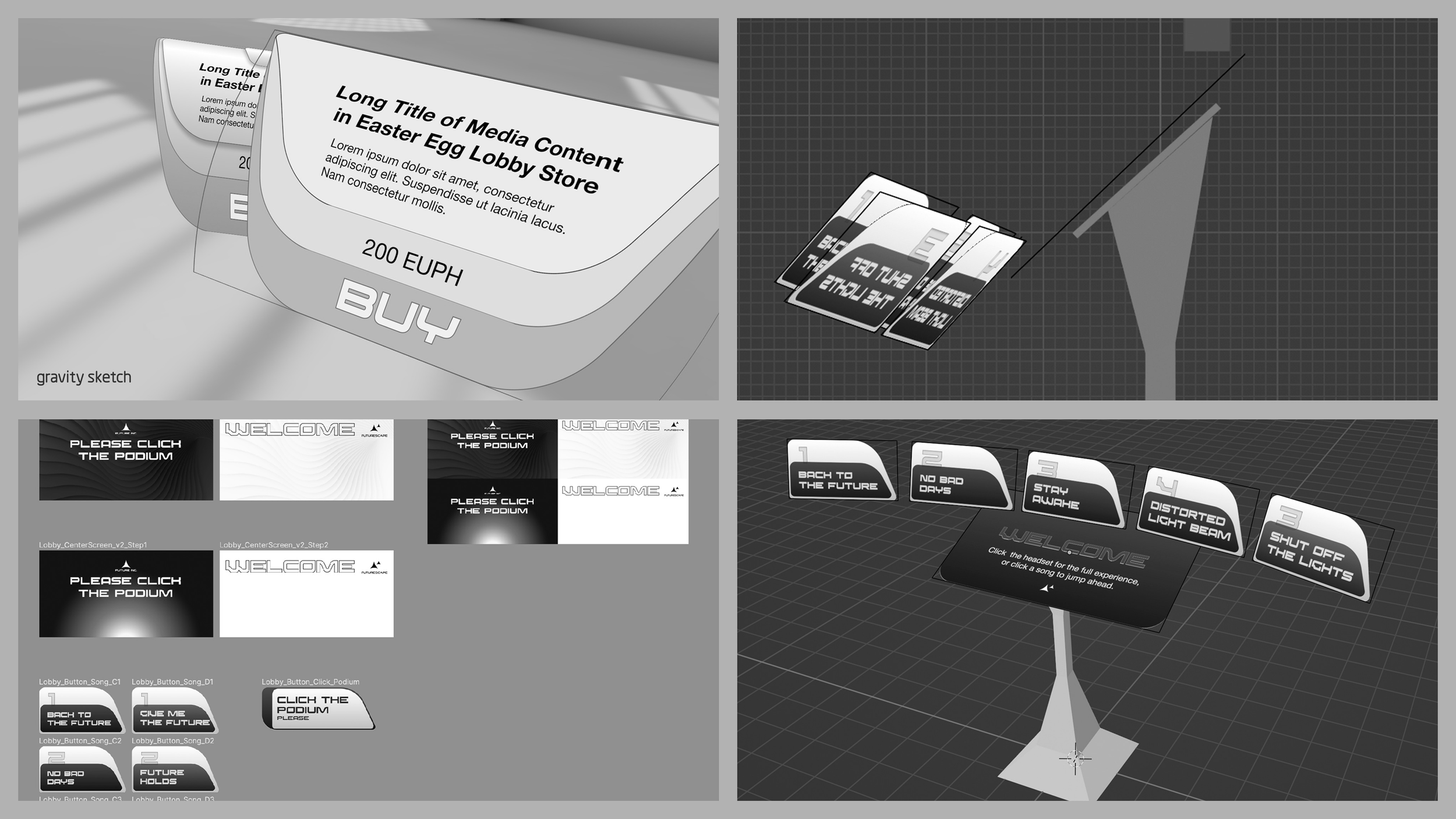
Using Gravity Sketch and Blender to ideate and test visual design and refined details of a possible VR hub interface.
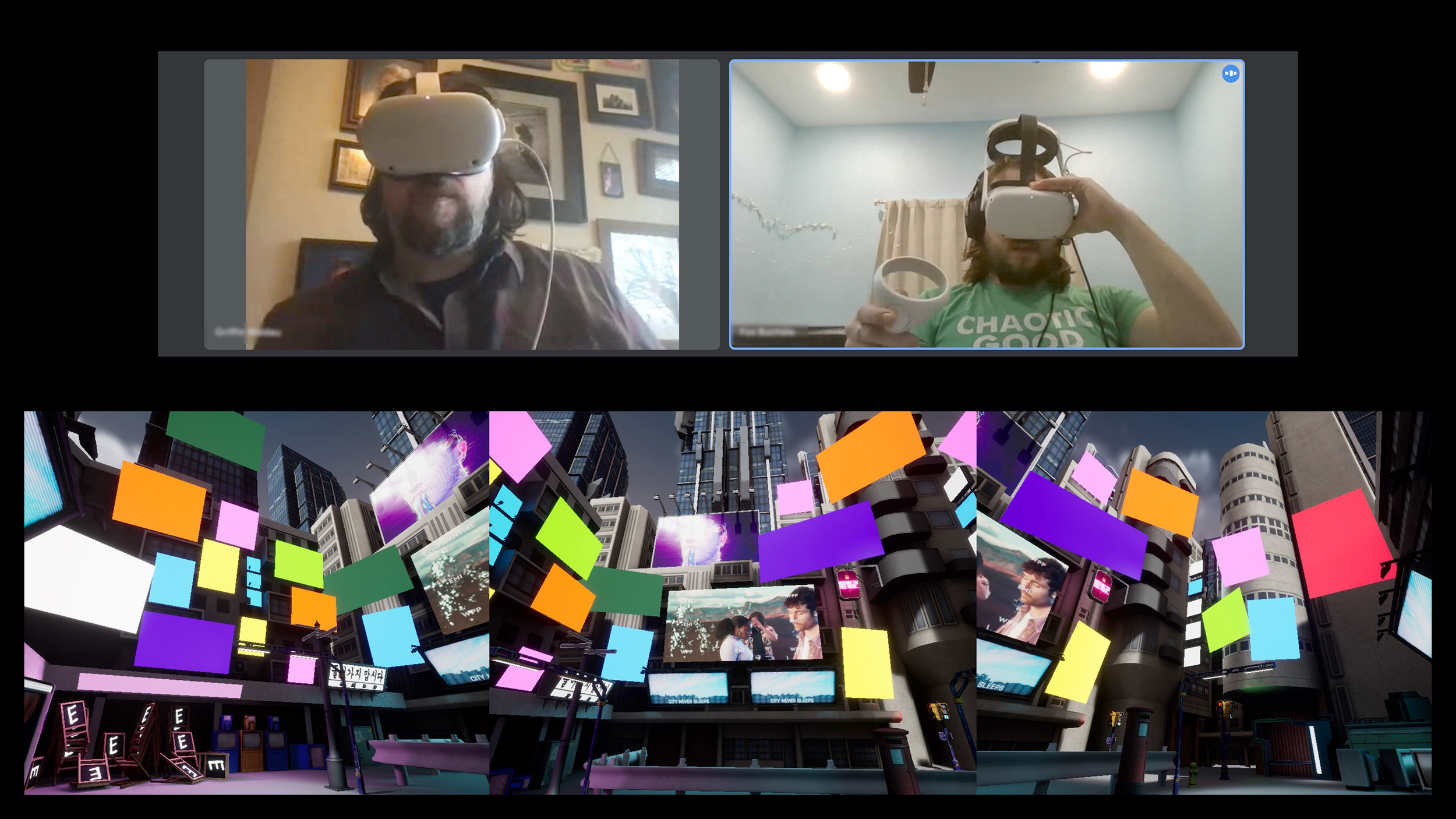
Top: screenshots from frequent critique and feedback collaborations across Microsoft Teams. Bottom: screenshots of what the user is seeing in VR. The different colored boxes represent where graphics and visual assets would be placed.
Takeaways
This innovation experiment taught me valuable lessons about partner relationships, project ownership, and the importance of clearly defined decision-making authority. It also sharpened my understanding of effective communication, team accountability, and how the creative process holds up under pressure without firm goals. Despite the outcome, it reinforced my drive to keep working at the intersection of music, emerging technology, and immersive storytelling.