Comicans
A web-based AR collector's game
VML, SubVRsive, Disney, Coca-Cola
The Ask
Drive engagement of collectible Coca-Cola products through an augmented reality campaign using physical products as an entry point.
My Role
Sr. User Experience Designer
Problem Framing, Defining Opportunities, Journey Mapping,
Structuring Information & Systems, Experience Design, Collaboration, Alignment
Results
1.95 billion global impressions • 5.29 million earned social impressions • Coca-Cola's #1 selling North American merchandise
Background
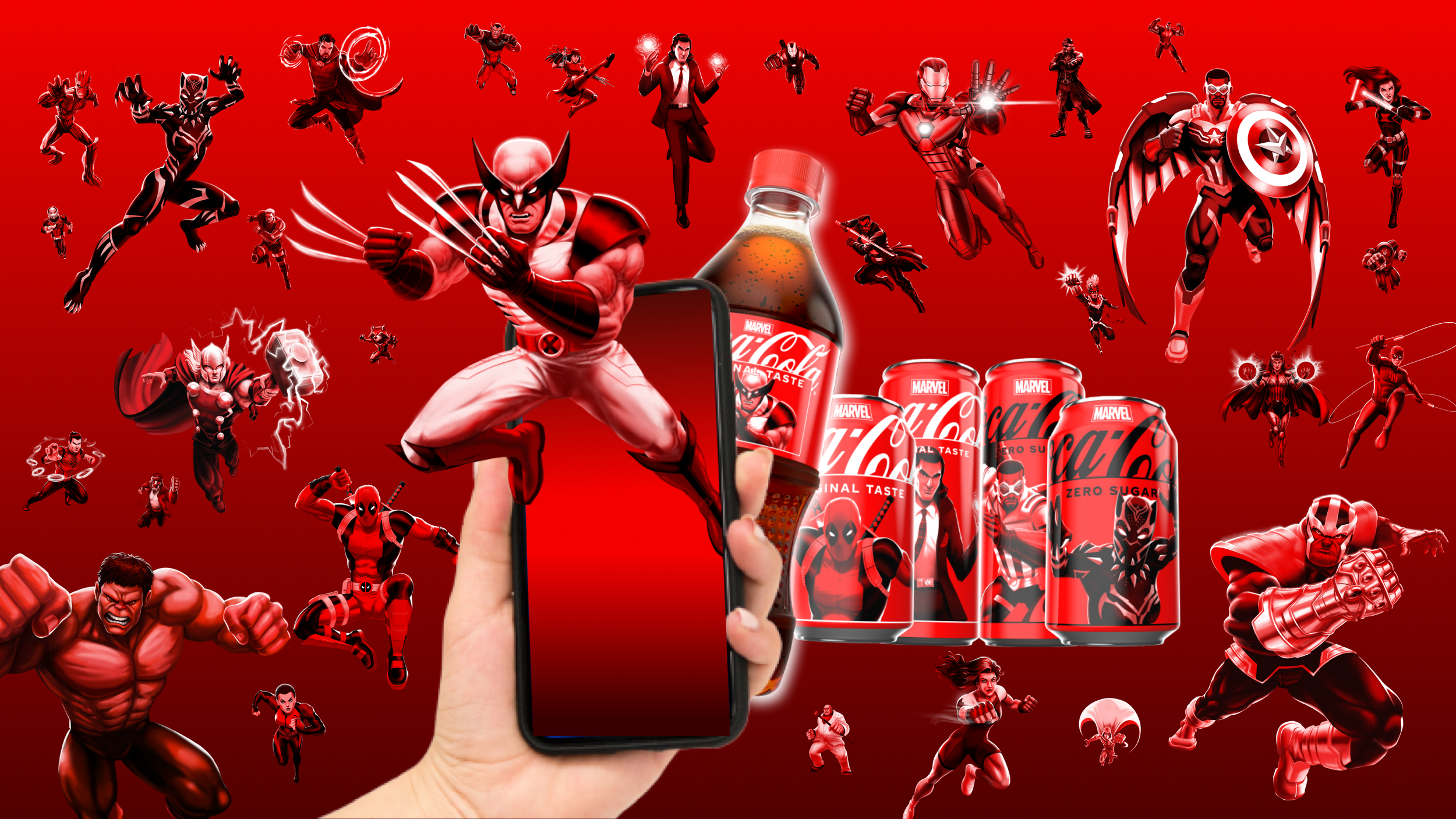
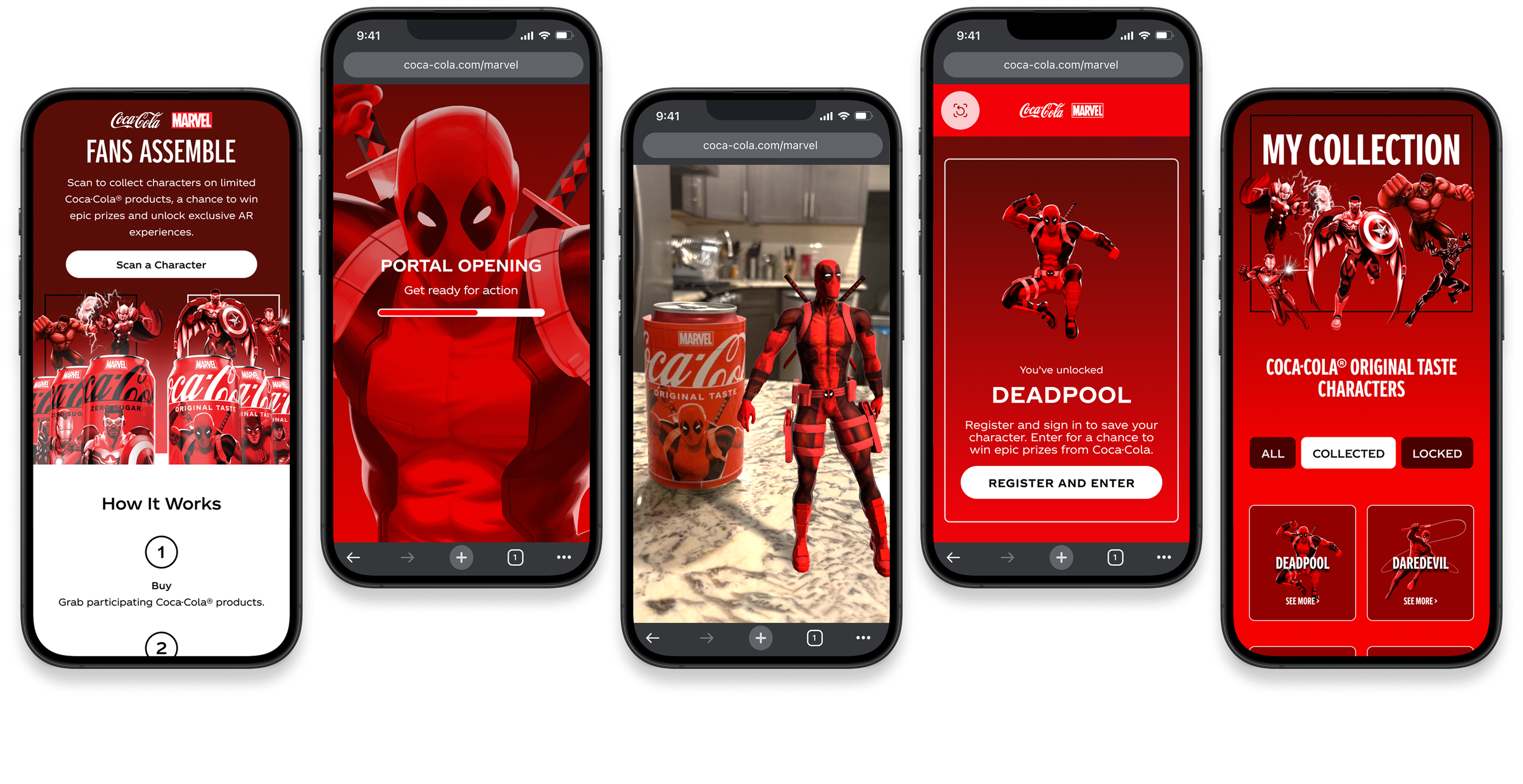
Coca-Cola partnered with Disney and Marvel Entertainment to launch "Comicans," a global product initiative featuring 32 Marvel characters across exclusive collectible cans, bottles, and packaging. VML was asked to design and deliver an immersive augmented reality (AR) experience that would engage both casual fans and hardcore collectors, encouraging repeat purchases across a multi-month campaign. The core mechanic: customers scan a purchased can bearing a unique character, triggering an AR moment that brings the character to life on their phone. Completed scans populated an online dashboard and entered customers into a broader prize competition.
Team & Role
I served as a Senior UX Designer on a team of 2–4 experience designers, working alongside design leads, project managers, and client engagement staff. VML also partnered with SubVRsive, a mixed reality specialist agency responsible for technical execution. Our design team owned concept, story, and experience co-creation, from initial ideation through final AR asset validation.
Slides from early concept ideation and stakeholder alignment phases.
Approach
I helped prep and facilitate a client workshop centered on concept ideation, stakeholder alignment, and live whiteboarding to establish creative direction early. From there, I conducted research into comic book aesthetics and history, Marvel's multiverse storylines, and the technical constraints of AR/mixed reality on mobile devices, grounding the work in both cultural accuracy and platform feasibility.
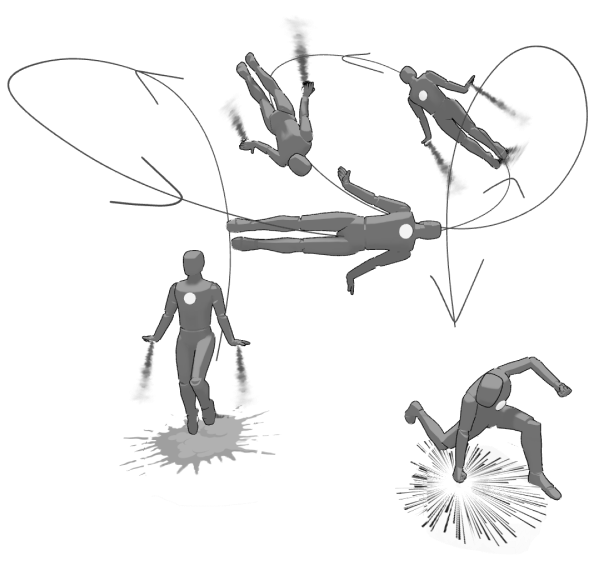
Using that foundation, I developed character profiles for all 32 characters (plus 8 interactive character pairs) and translated them into multi-page storyboards mapping each AR moment. Storyboards moved through iterative rounds of team and stakeholder alignment and client approval. To push storyboarding further, I used a VR sketching application on the newly released MetaQuest 2 to prototype character moments in three-dimensional space — testing feasibility before committing to full 3D production.
Some of the full story-boarding documentation, outlining each character’s individual narrative, complete with AR motion and animation.
Left: close-up of a moment in a character’s AR activation, showing the multiple rounds of feedback. Right: A larger zoomed-out view of storyboard phases in Figma.
I then partnered closely with SubVRsive's design team to build out user flows, sitemaps, journey maps, and touchpoint maps for the end-to-end experience, which began with account sign-in on Coca-Cola's website and culminated in the mobile AR scan. This included an extensive microsite, built on Coca-Cola's existing design system OpenX, that showed users how the experience worked across both desktop and mobile, even though gameplay itself was mobile-only.
Throughout, I built low-fidelity Figma prototypes to visualize title sequences and character performances, and contributed to a reusable design/asset system to speed production across characters. I also produced the two-dimensional supporting assets each character needed for their AR storyline, with significant research invested in ensuring superpowers, abilities, and movement stayed accurate to established Marvel IP.
Left: Early site map and operational system mapping for Coca Cola’s .com workstream. Right: a full Figma artboard showing all of the final desktop and mobile page designs.
Various sketches, prototypes and annotation designs for each of the character’s AR entrance moments and product activation storytelling.
Challenges
Producing accurate 3D models for 32 distinct characters from storyboards proved far more time-and resource-intensive than scoped, surfacing recurring technical bugs. Even with SubVRsive’s deep AR/mixed reality expertise, can-scanning reliability and the quality of AR visualizations required ongoing workarounds. These constraints forced continual cross-functional compromise between the ideal creative vision and what was technically feasible to ship, a tension we navigated through rapid, collaborative problem-solving rather than a single design pivot. In the final stage, I helped review and refine the 3D character assets so their visual quality held up across different environments and lighting conditions.
Details of a character’s 3D mesh modeling for client and team approval.
Reviewing the refined character meshes across different environments and lighting conditions
The Outcome
Comicans launched simultaneously with in-store product availability across 50 countries, supported by a new television commercial and a broad social media campaign. The activation generated 1.95 billion global impressions, 5.29 million earned social impressions, and made the collectible line Coca-Cola's #1 selling North American merchandise.
Takeaways
AR experiences are more operationally complex than they appear on the surface, and reliable execution depends on low-fidelity technical foundations that still need to perform across both low- and high-bandwidth conditions. Concepting for a culturally significant IP like Marvel was demanding but rewarding, and it sharpened my understanding of the gap between the ideal design solution and the feasible, deliverable one. The nine-month engagement pushed my growth as a three-dimensional and systems-level thinker, and left me eager to continue working in AR/VR/mixed reality.